 |
|
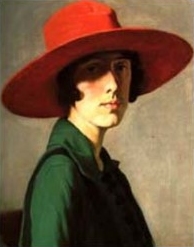
Vita Sackville-West
by William Strang.
|
Like many people I know a little about the colourful life of Vita Sackville-West: her elopement with Violet Trefusis; her affair with Virginia Woolf; her famously open marriage with Harold Nicolson, and her creation of the beautiful gardens at Sissinghurst. But I’d never read any of her work until I spotted a copy of All Passion Spent while I was filling gaps on the shelves in the Oxfam bookshop where I volunteer for a morning a week.
So I bought it (despite promising the family that as they bought me a Kindle there would be no more books brought into the house) and very good I found it. Published in 1931, the novel centres on Lady Slane, whose husband, a former Prime Minister and foreign diplomat, has just died. Now aged 88, she moves into a small house in Hampstead, accompanied only by elderly maid Genoux, and thinks about the girl she once was – the girl who sublimated her own hopes and needs to become the perfect wife and mother, doing exactly what was expected of her.
She refuses to see her children, grandchildren or great-grandchildren, but enjoys the company of house owner Mr Bucktrout, handyman Mr Gosheron and eccentric millionaire Mr FitzGeorge, who met her many years before in India. Like her, they enjoy beauty, but they make no demands on her: they just let her be what she is.
We learn that although she lived in luxury, with furs and jewels, possessions mean little to her, and she once wanted to become an artist, but got married and became a passive ‘appendage’ while her husband led an active life, but her life was shaped and controlled by the conventions of society. She has not been unhappy, for she loved her husband, but the things she wanted were not part of his world and were never considered. Here, at the end of her life she is finally able to take control, and when Mr FitzGeorge leaves her his money and art collection she is able to recapture the girl she once was and remain true to herself – by giving the legacy away. And her action gives her great-granddaughter Deborah the courage to break her engagement and pursue a musical career, so she will find the fulfilment that Lady Slane never did.
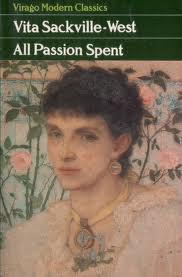
It would be easy to view this as a feminist book, but I think Vita Sackville-West is pleading for everyone’s right to individual freedom. I like the cover of my Virago edition, which shows A Portrait of Mrs George Henry Boughton, attributed to R Caldecott, who is better known for his humorous work and his illustrations for children’s books. The painting, of a woman whose own name is not important enough to be recorded, captures the way women were treated as possessions.
Edited, July 10, 2013: As you can see from Avril Silk’s comment below, the portrait is by Kate Carr, and was formerly attributed to Caldecott. And the lady’s name is Catherine.
Edited, July 10, 2013: As you can see from Avril Silk’s comment below, the portrait is by Kate Carr, and was formerly attributed to Caldecott. And the lady’s name is Catherine.

 The Book Trunk
Leave a comment