 |
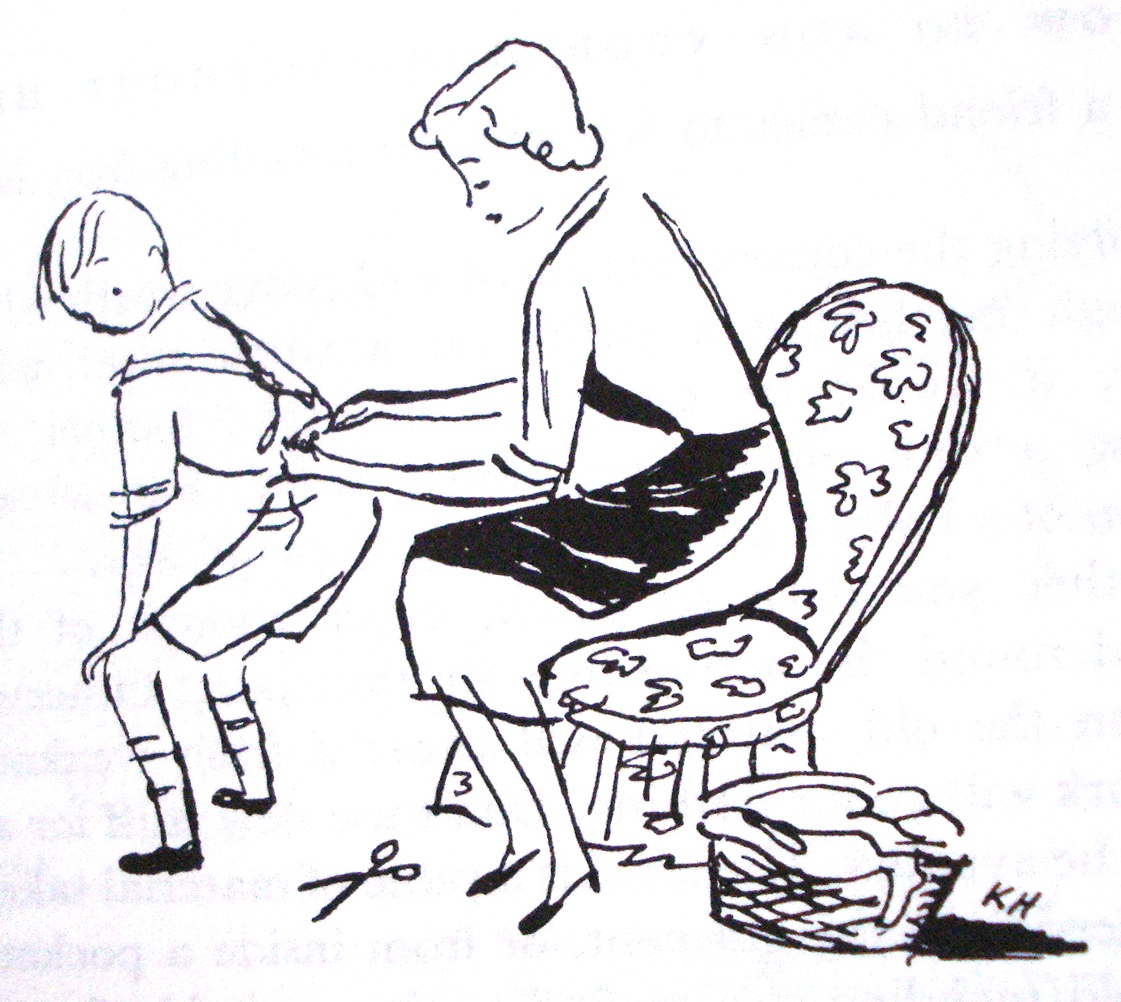
| Doing The Mending: Each chapter heading in How To Run Your Home Without Help is illustrated with a lovely little line drawing |
Housework, as those who know me will confirm, has never been one of my accomplishments, and the Man Of The House is equally unenthusiastic about domestic activities. ‘Lived-in’ is how people describe our home. Or even ‘very lived-in’, uttered somewhat disparagingly as they shift books off the sofa, brush cat hairs off their clothes and stare in horror at the state of our coffee mugs.
 |
| A trip down Memory Lane: This book brought back memories of my childhood, and how hr my mother worked to keep the house clean |
Post-redundancy, you might expect me to have turned over a new leaf because I now have time for the household chores but, if anything, the situation is even worse than it was, as I have discovered all kinds of things that are far more interesting and enjoyable than cleaning, polishing, ironing and washing up.
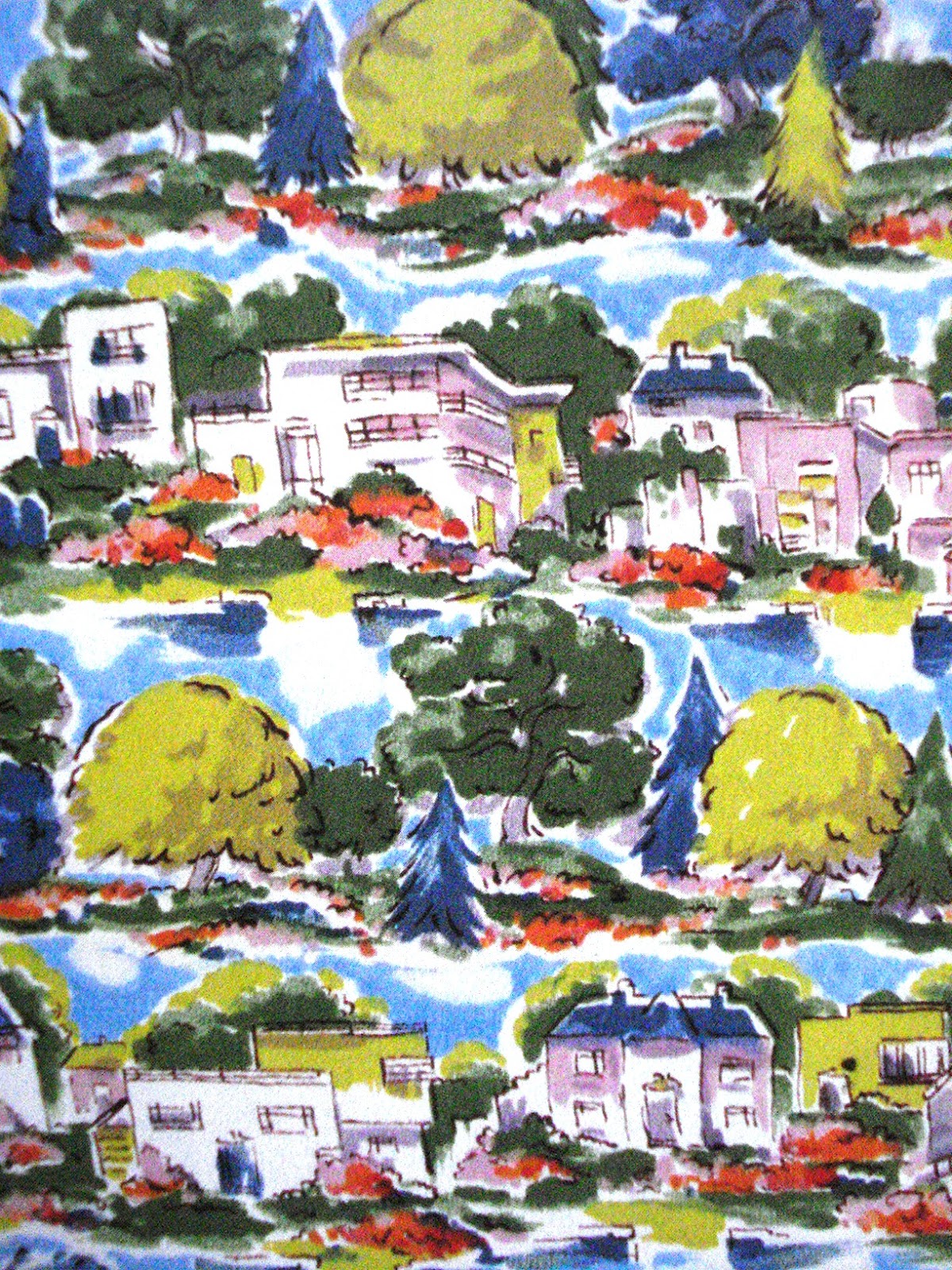 |
| The endpapers are taken from ‘Riverside’, a 1946 printed dress fabric in rayon crepe, and I bet it looked fabulous made up |
So, reading them in the order I acquired them, first up is How To Run Your Home Without Help, written in the aftermath of the Second World War. The army of women who had been working as maids, cooks and children’s nannies spent the war years doing other things: some joined up, or became Land Girls, while others worked in munitions factories, or took on jobs left vacant while men were fighting. When the conflict was over few of those who had been ‘in service’ were prepared to return. Life had changed, and well-heeled, middle-class women were left to run their homes on their own, when rationing was still in existence, and shortages of food and all kinds of other goods were still widespread. It must have come as a terrible shock them, and there’s an excellent preface by Christina Hardyment which puts the book in its historic context.
 |
| The problem with buying second-hand Persephone is that the bookmarks are missing, but I found this postcard which seemed suitable |
I adore the chapter on Doing The Washing, which mentions a ‘hand-operated simple washing machine’ which is an ‘elaboration of a wash-boiler’. Oddly enough, my mother had an antiquated version of something like this when I was a child. There was a rubber hose, which ran from the tap into the machine, and the gas underneath had to be lit to boil the water. I seem to remember there was a plastic paddle inside, which agitated the washing, and everything had to be dragged into the sink with enormous wooden tongs so it could be rinsed, then pushed through the mangle which was attached to the washer. When my brother was born we had a home-help, who couldn’t get to grips with this machine at all, and flooded the kitchen…
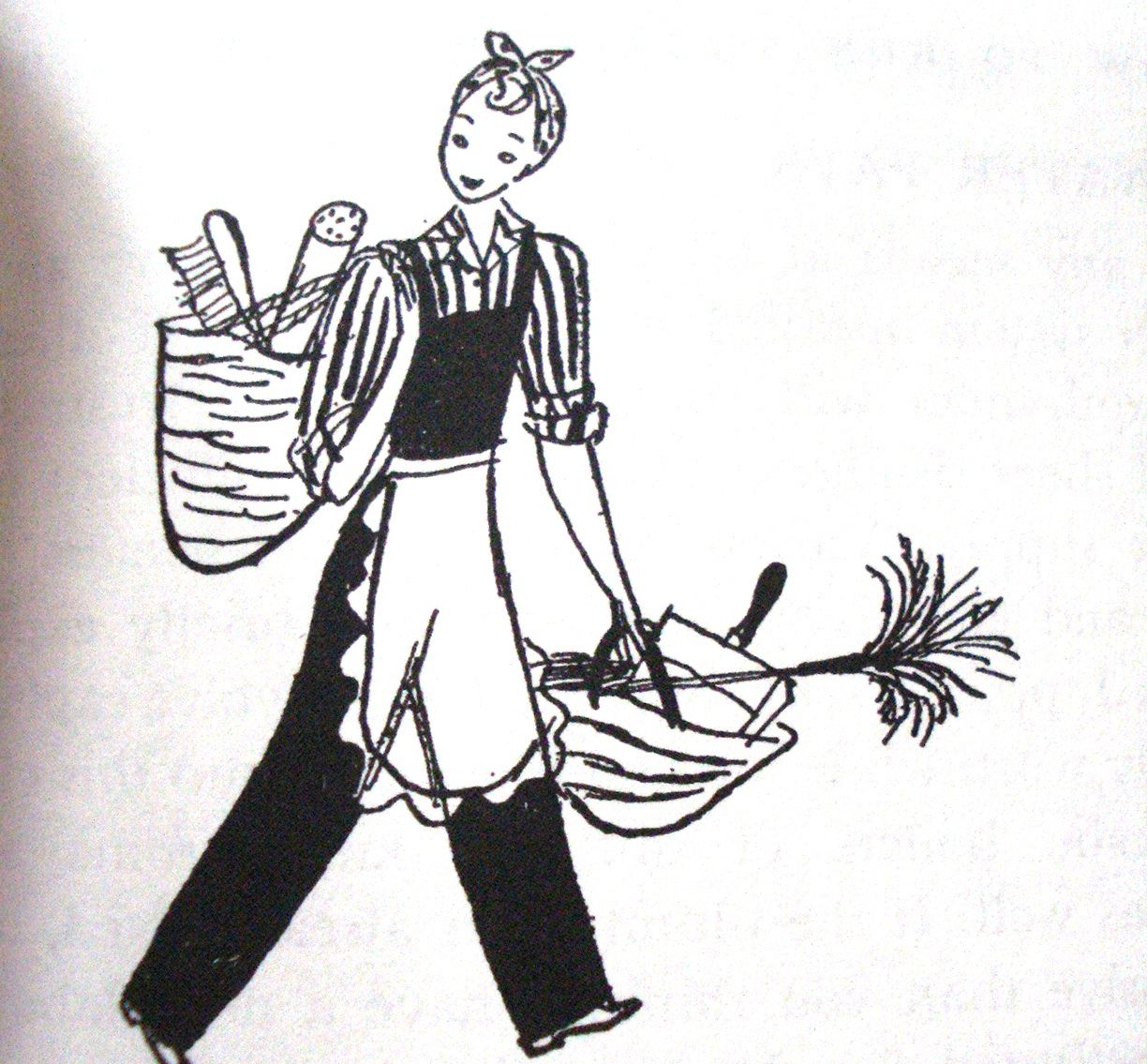 |
| Ready For Action: Chapter III is all about using the right equipment |
Other long-vanished household tasks include things like cleaning the front steps – again, it conjured up memories of my childhood, when my mother, along with most of the other women in our street, would buff up the step with red lead polish. I suspect that Mum, and all the other women she knew, never read this book, but just used their common sense, doing things the way their mothers had done but, as advised by Smallshaw, Mum always recycled old clothes, towels, tea towels and sheets to make cloths for cleaning, dusting and polishing (no J-cloths in those days). And, as there were no spray cans, the cupboard under the sink boasted an impressive array of cleaning lotions and solid wax polishes, just as the book recommends.
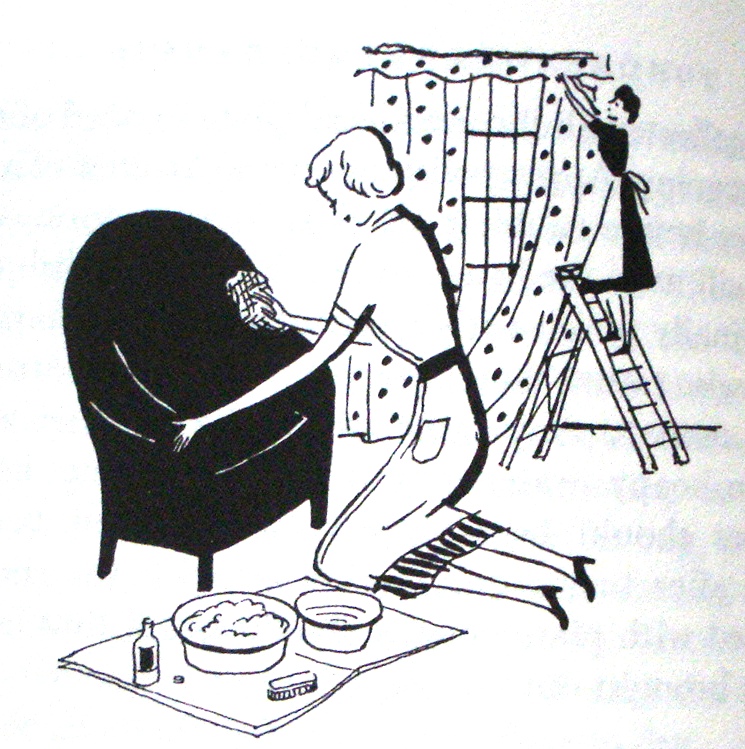 |
| Spring Cleaning: Does anyone still do this? |


 The Book Trunk
Leave a comment