 |
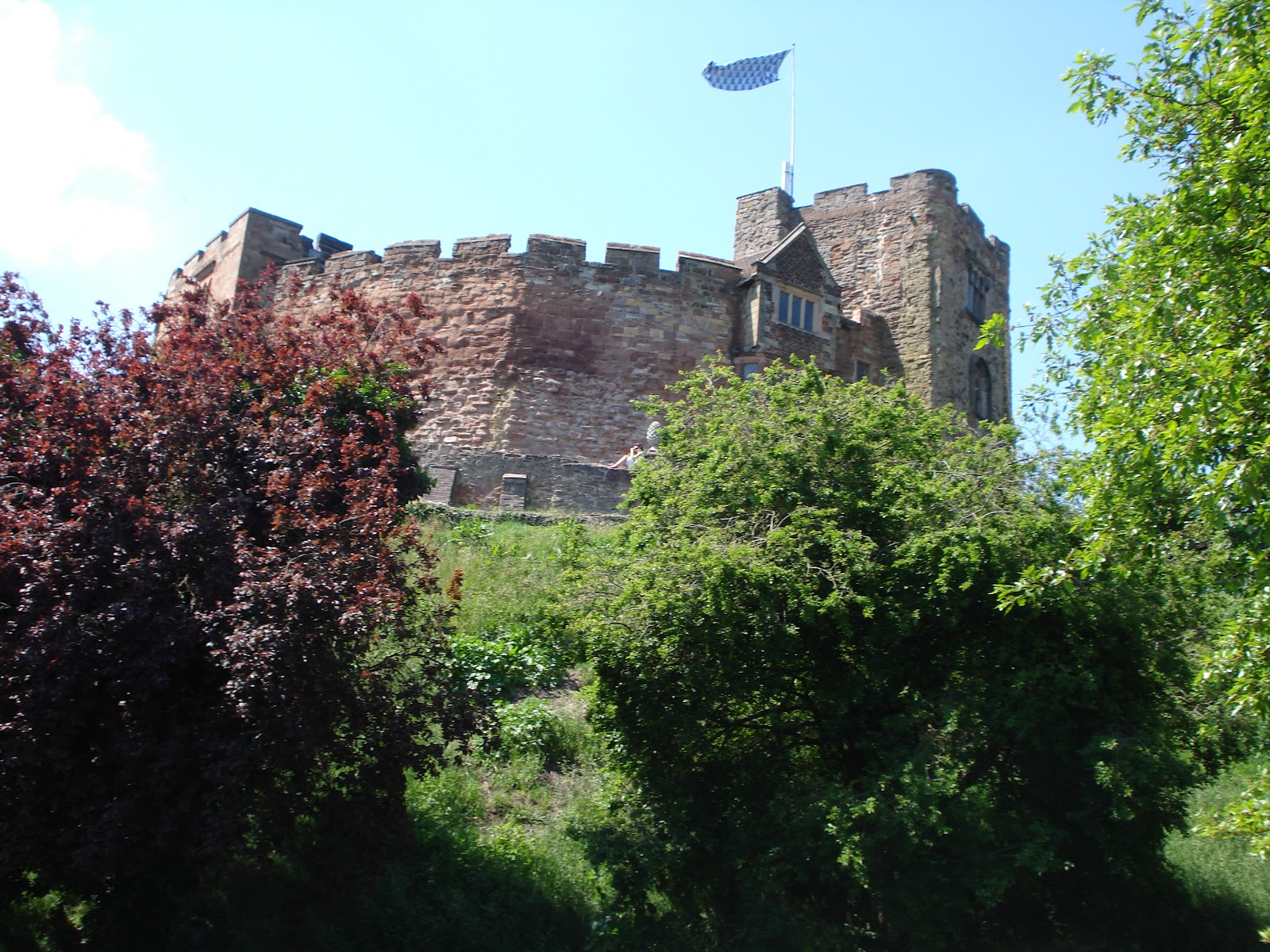
| I took this picture of Tamworth Castle a couple of years ago, and some of the trees have been cut back, but it shows the mound (said to have been built by Ethelfleda) fairly clearly. |
I am feeling sad today, because my elder daughter left this morning to set up a home of her own with her boyfriend in Plymouth, which is around 225 miles away from us. She has arranged to do her final placement as a student in a hospital down there, and has been lucky enough to get a nursing job, which she can start in September, when her training is complete and she will, hopefully, be fully qualified. Obviously, I am tremendously proud of her, but I shall miss her, and Devon seems a long way from Staffordshire.
So, to cheer myself up, today’s Saturday Snapshots are about a feisty warrior queen, whose story is very stirring. Ethelfleda, known as the Lady of the Mercians, was born around 869 and was the daughter of Alfred the Great (the one who burnt the cakes, but that’s another tale altogether). After the death of her husband Ethelred – not the Unready, but an earlier king of the same name – she became ruler of Mercia and embarked on a ferocious campaign against the Danes, beating them back to Watling Street, the old Roman road. People to the north of the route had to pay the Danegeld, which sounds less like a tax, and more like the kind of protection racket run by American gangsters during Prohibition. But, thanks to Ethelfelda, people living on the southern side were free Saxons – although personally given the social set-up of the day, I think the word ‘free’ may be open to question.
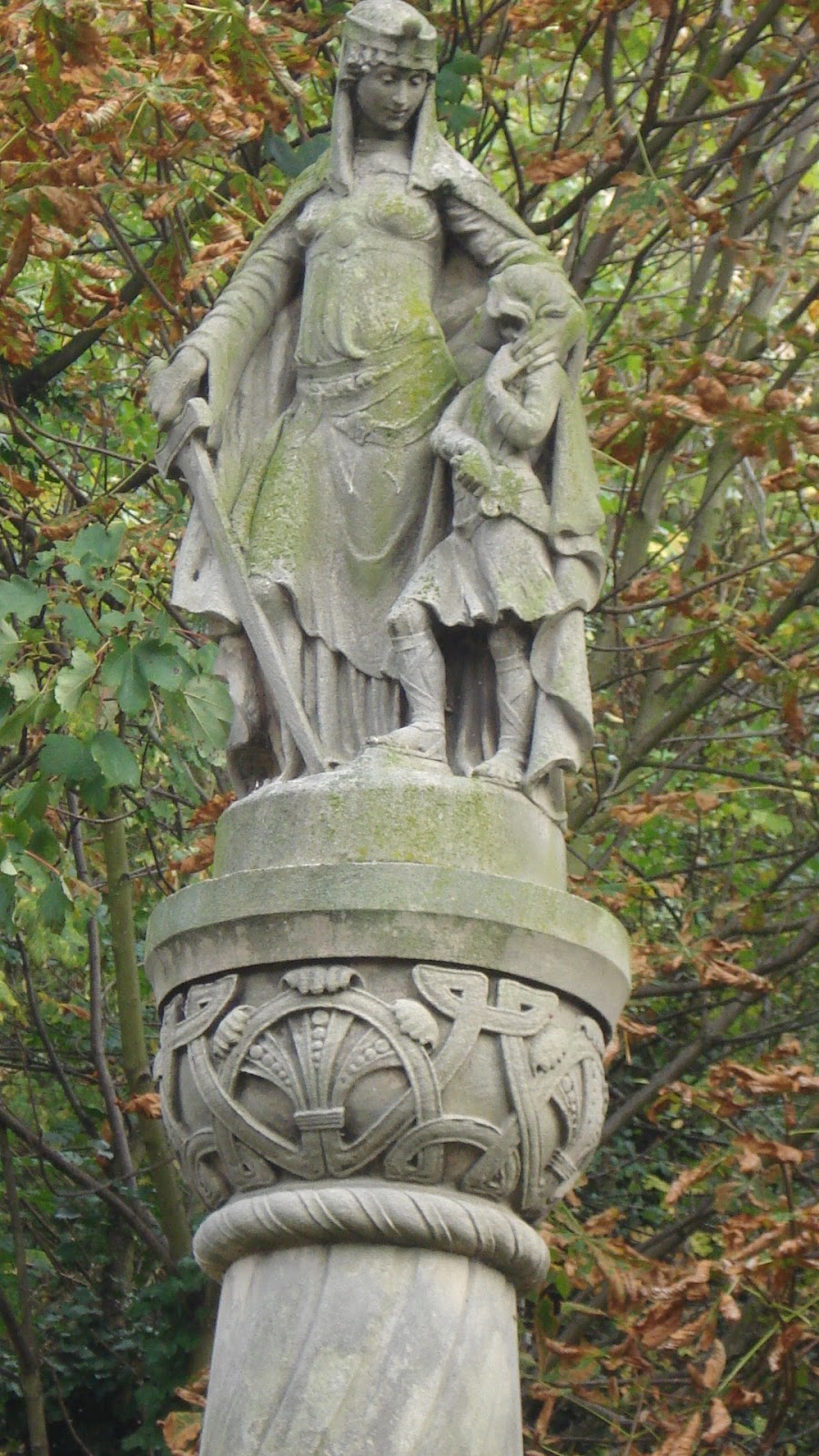 |
| The Ethelfleda Monument in Tamworth. |
Anyway, Ethelfleda built a string of defensive fortresses across the Midlands, including the one she established here in Tamworth in 913. It is thought she raised the mound on which the present Castle stands so, presumably, her fortress (which would probably have been an earth rampart and wooden stockade) was on the same site. According to the Anglo Saxon Chronicles:
This year by the permission of God went Ethelfleda, lady of Mercia, with all the Mercians to Tamworth; and built the fort there in the fore-part of the summer; and before Lammas that at Stafford: in the next year that at Eddesbury, in the beginning of the summer; and the same year, late in the autumn, that at Warwick. Then in the following year was built, after mid-winter, that at Chirbury and that at Warburton; and the same year before mid-winter that at Runkorn.
In AD916 she led an army into Brecknock, in Wales, where she captured the king’s wife and 34 other people. She fought her last battle at Derby in 918, where the Chronicles record that:
This year Ethelfleda, lady of the Mercians, with the help of God, before Laminas, conquered the town called Derby, with all that thereto belonged; and there were also slain four of her thanes, that were most dear to her, within the gates. And the annals go on to explain: But very shortly after they had become so, she died at Tamworth, twelve days before midsummer, the eighth year of her having rule and right lordship over the Mercians; and her body lies at Gloucester, within the east porch of St Peter’s church.
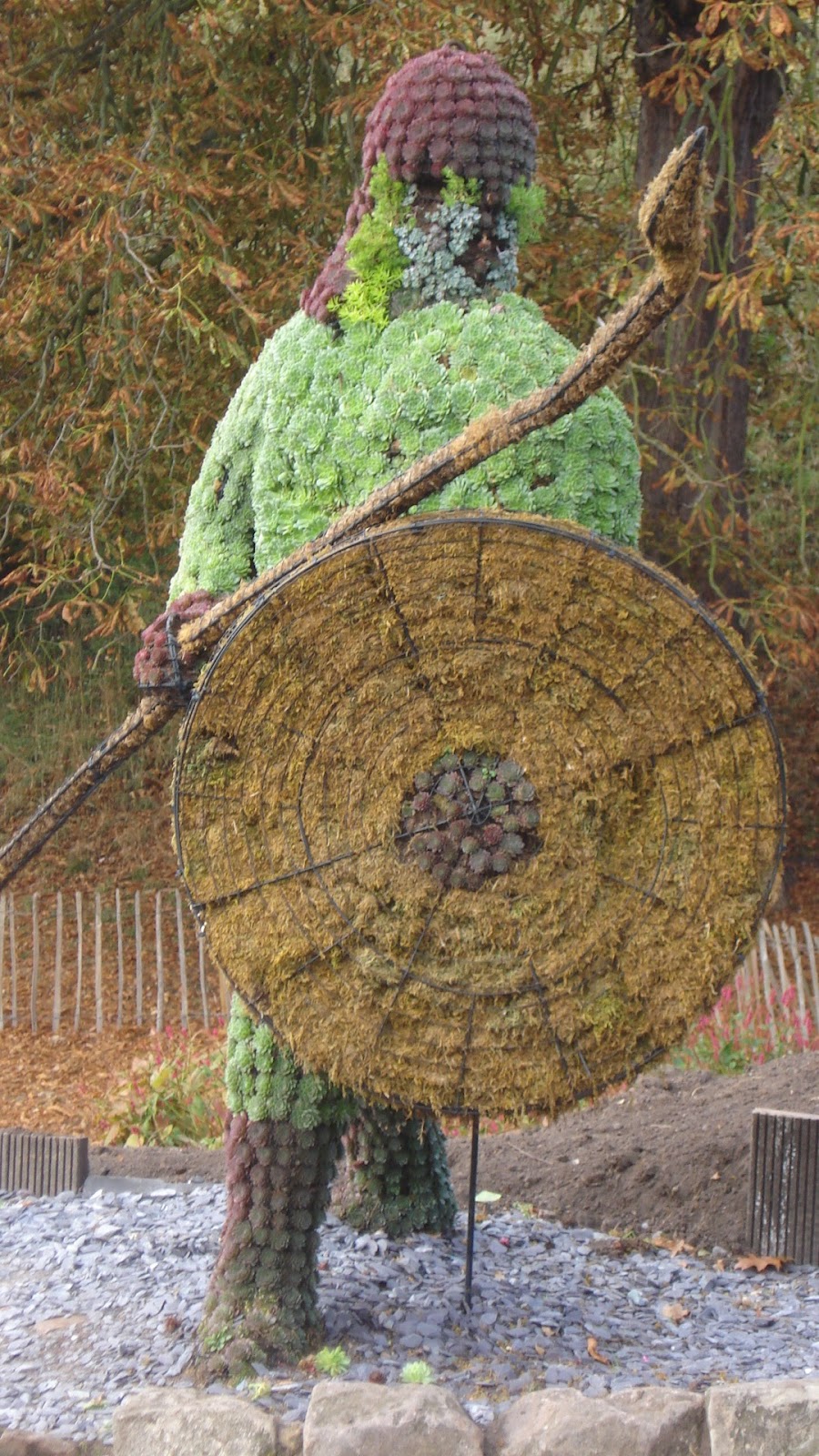 |
| Floral Fighter: This Saxon soldier was created last year. |
There is nothing to indicate whether she died from a wound, from illness, or old age. She was about 50, which doesn’t sound that old, but I have no idea what the average expectancy was in those days. Her tomb, apparently, can still be seen in the church she endowed, which is now known as St Oswald’s Priory. I keep promising myself that one of these days I will visit the city to pay homage to a local heroine. Her daughter Elfwyn succeeded her as Lady of the Mercians, but the following year was ‘deprived of all dominion over the Mercians, and carried into Wessex‘ (the Anglo Saxon Chronicles again). It was Ethelfleda’s nephew Athelstan, whom she had fostered, who eventually took the reins of power and became king, not just of Mercia, but of all England.
A statue of Ethelfleda, sheltering the young Athelstan with one arm while wielding a sword with the other, stands beneath the walls of Tamworth Castle. It was created for the town’s Millenary Celebrations of 1913, marking the 1,000th anniversary of the year when Ethelfleda, Lady of the Mercians, freed Tamworth from the Danes and fortified the town. By the way, if you want to know where Watling Street was, find a road map and look for the A5: it more or less follows the old route where it ran from London to Wales. And if you don’t know much about Mercia, it covered most of Staffordshire, Derbyshire, Leicestershire, Nottinghamshire and Warwickshire.
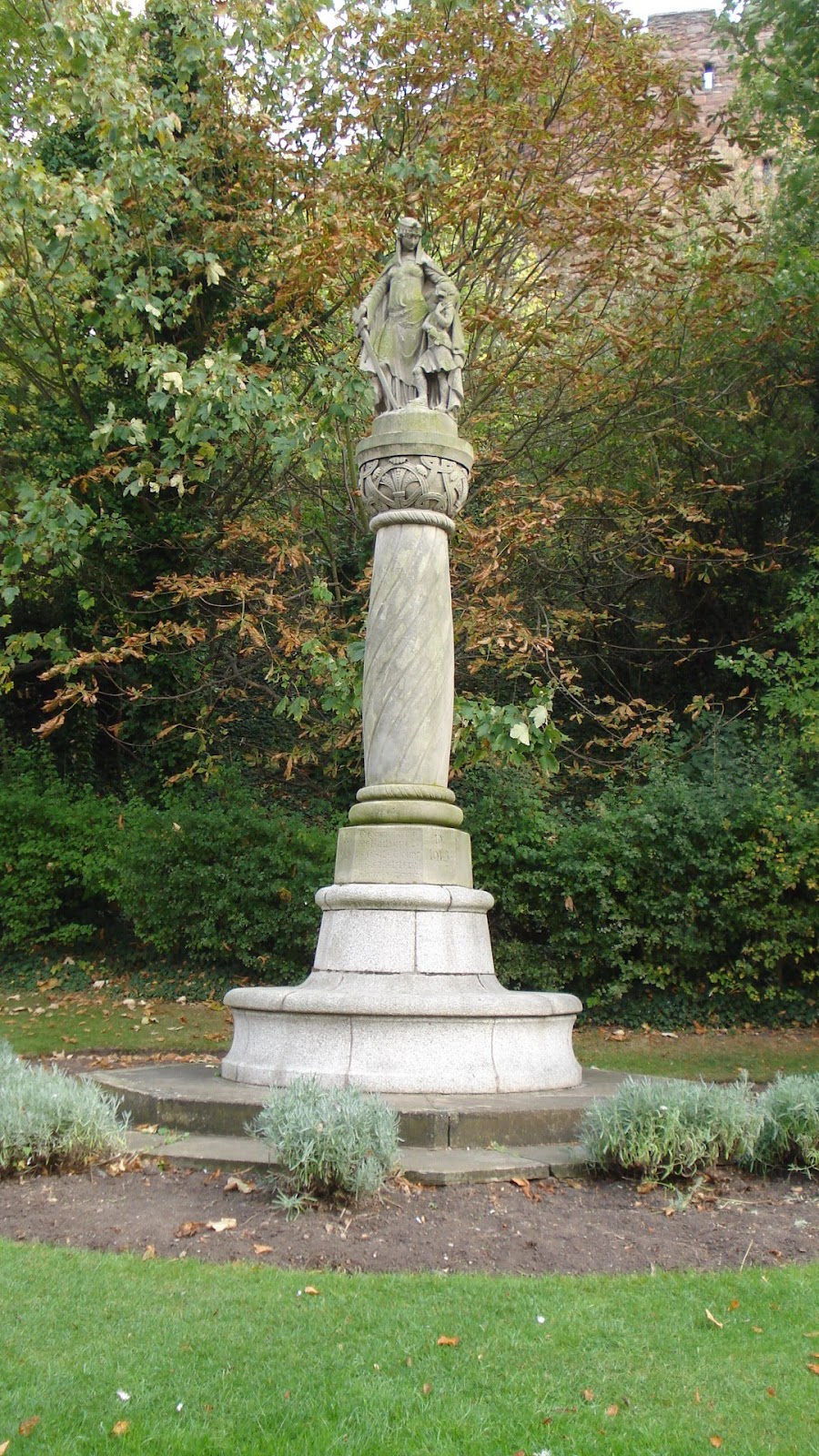 |
| A view of the whole statue. |
For more Saturday Snapshots see Alice’s blog http://athomewithbooks.net/

 The Book Trunk
Leave a reply to bermudaonion Cancel reply