 |
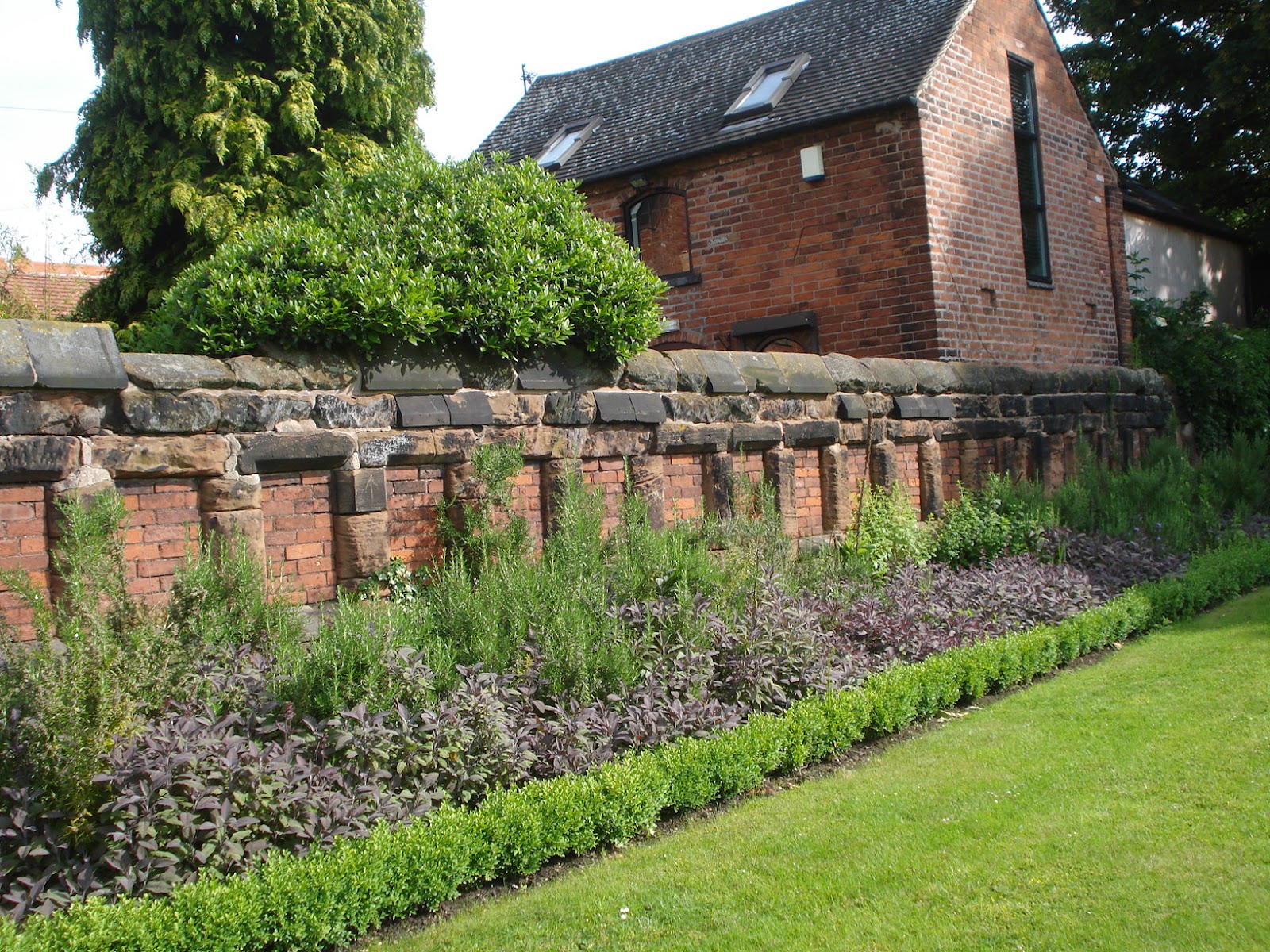
| The Friary Gardens in Lichfield mark the spot where monks once prayed. |
Stepping stones in a small park in Lichfield will lead you on a 800-year journey back in time. At first glance the paving slabs laid out in the grass alongside a busy road look as if they’ve been set there in random fashion – for some kind of children’s game perhaps. But look again, and you realise they represent the lines of a building, and the name of the road provides a clue about its identity. For this street is The Friary, and the building which stood here was the church which served the huge friary established by Franciscan monks way back in 1237.
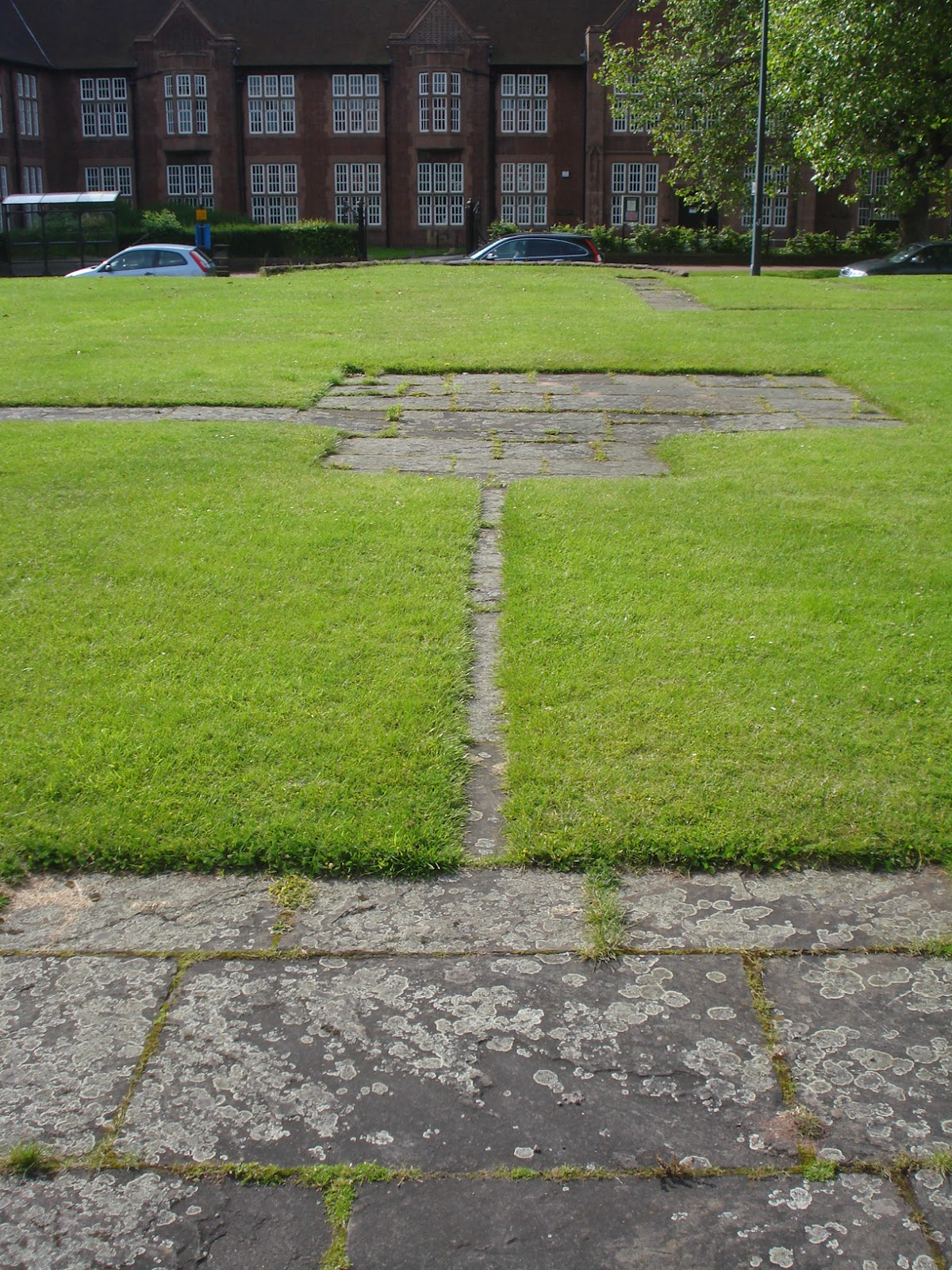 |
| Paving slabs show the layout of the church. |
Part of the wall at one end of the garden dates back to the Medieval period, and the little patch of ‘public space’ has been planted with sweet smelling flowers and shrubs. There’s seating where you sit and think of the friars in their grey habits, kneeling and praying here all those years ago. And – oh joy of joys – there is an excellent information board, so full marks to Lichfield City Council for preserving the area and telling people about it.
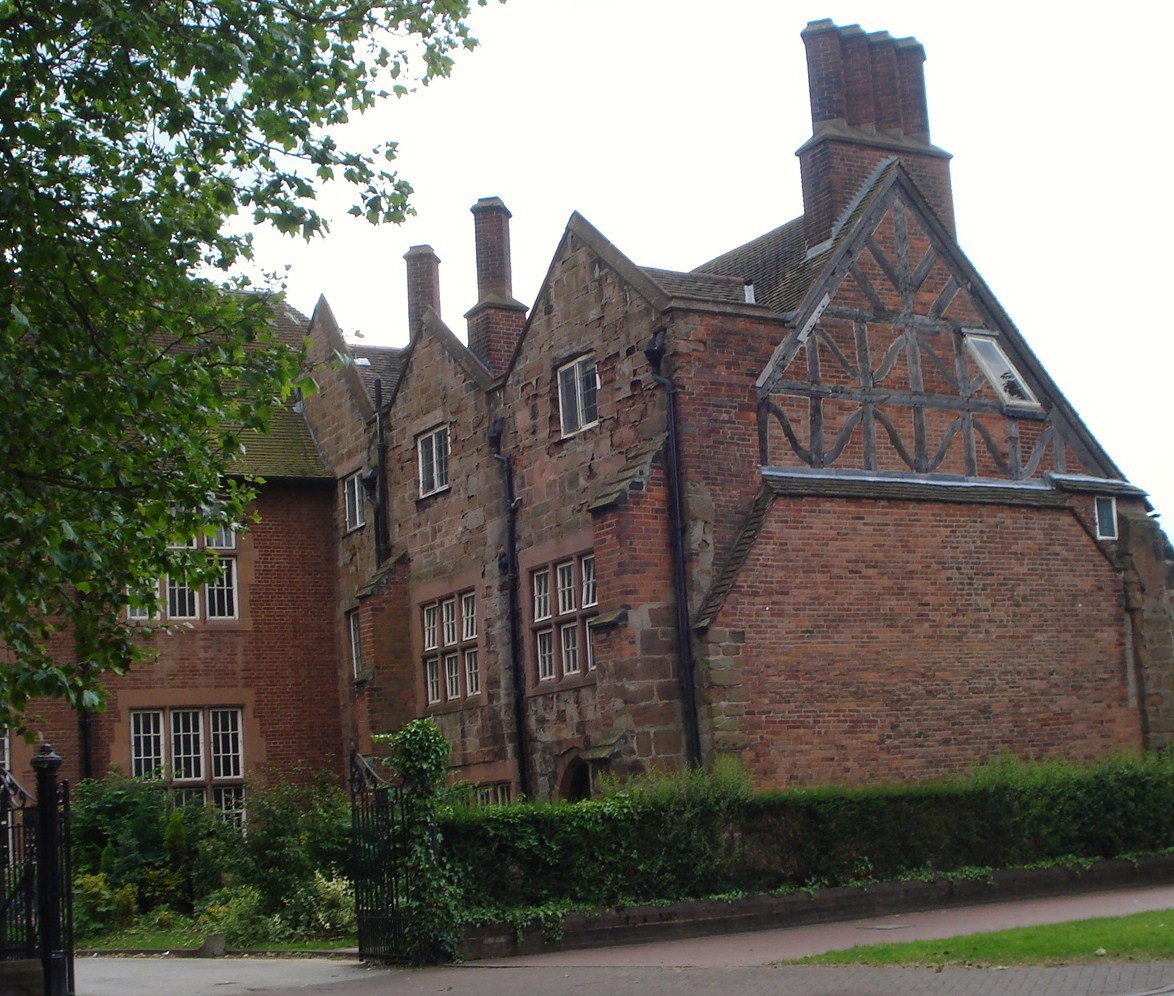 |
| The Bishop’s Lodging – the only building left from Lichfield’s old Friary. The extension on the left-hand side of the photo is the school built in the 1920s. |
I assume the land must have belonged to the Cathedral (which is only a few minutes walk away) because Bishop Stavenby gave it to the Franciscans; the Sheriff of Lichfield was authorised to clothe them, and Henry III helped with building costs by giving them money, and trees from his forests in the area. The friars continued to enjoy royal patronage, for in 1281 Edward I donated eight trees from nearby Cannock Chase, for new buildings. In 1291 the friary, together with many other buildings in Lichfield, was destroyed by fire, but was rebuilt – this time in stone.
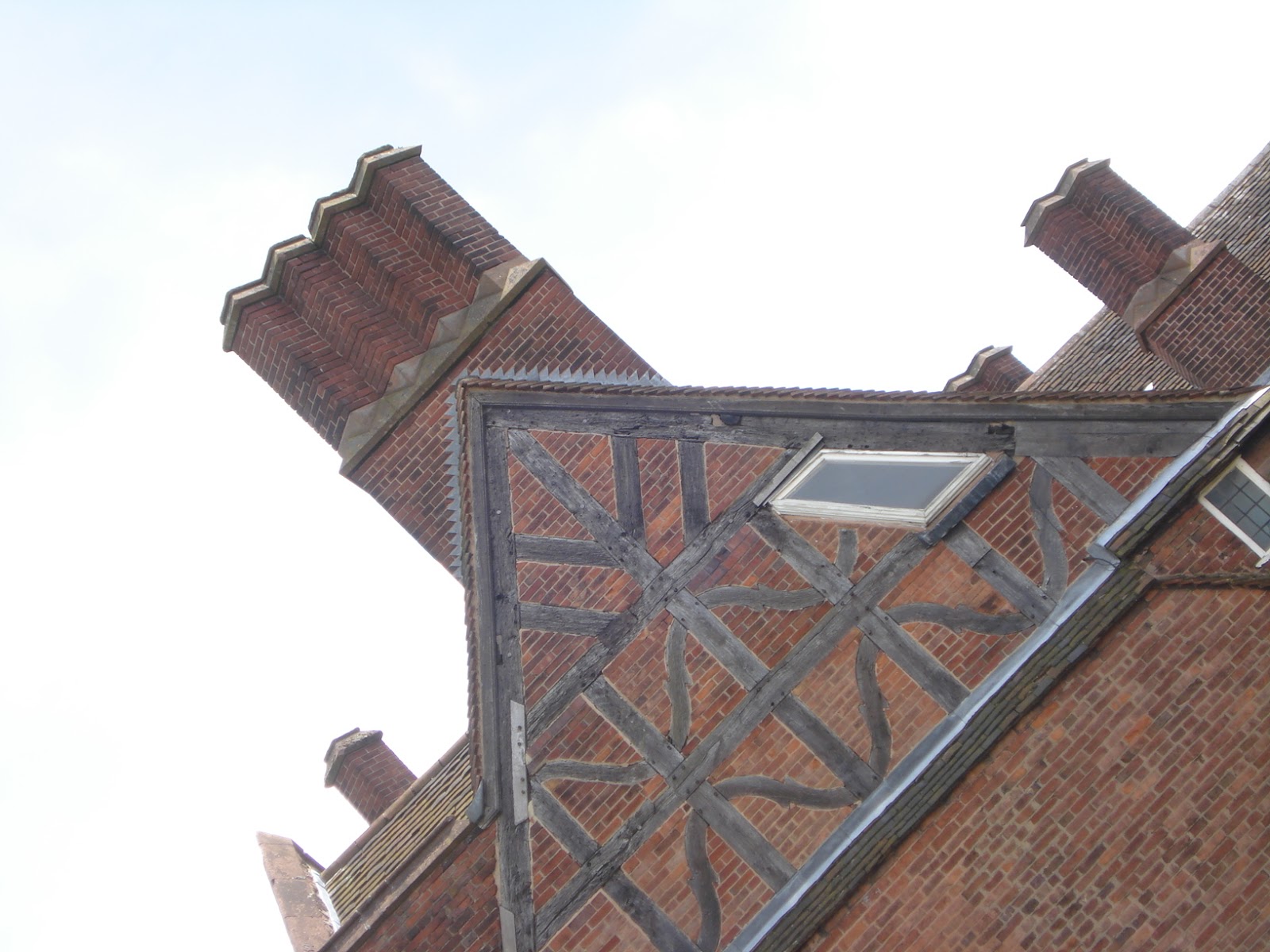 |
| The gable end of the Bishop’s Lodging. Where that strange little window came from I have no idea – I guess it was put there before modern planning laws were introduced. |
According to the Rule of St Francis, the friars were supposed to follow a life of poverty, chastity and obedience, and to focus on preaching and looking after the poor and sick of Lichfield. But over the centuries they amassed a fortune in gifts from benefactors, which must have made them a prime target during the Dissolution of the Monasteries. The Friary closed its doors for the last time in 1538, and most of the buildings were pulled down. Glass, tiles, stone and timber from the demolished buildings were sold to raise cash for the royal coffers, alongside furniture, the monks’ vestments, and even a mass book, which went for 4d (we are talking old money here, remember). The land, and those buildings which were still left were also sold – though purchasers were told to ‘deface’ various parts of the church.
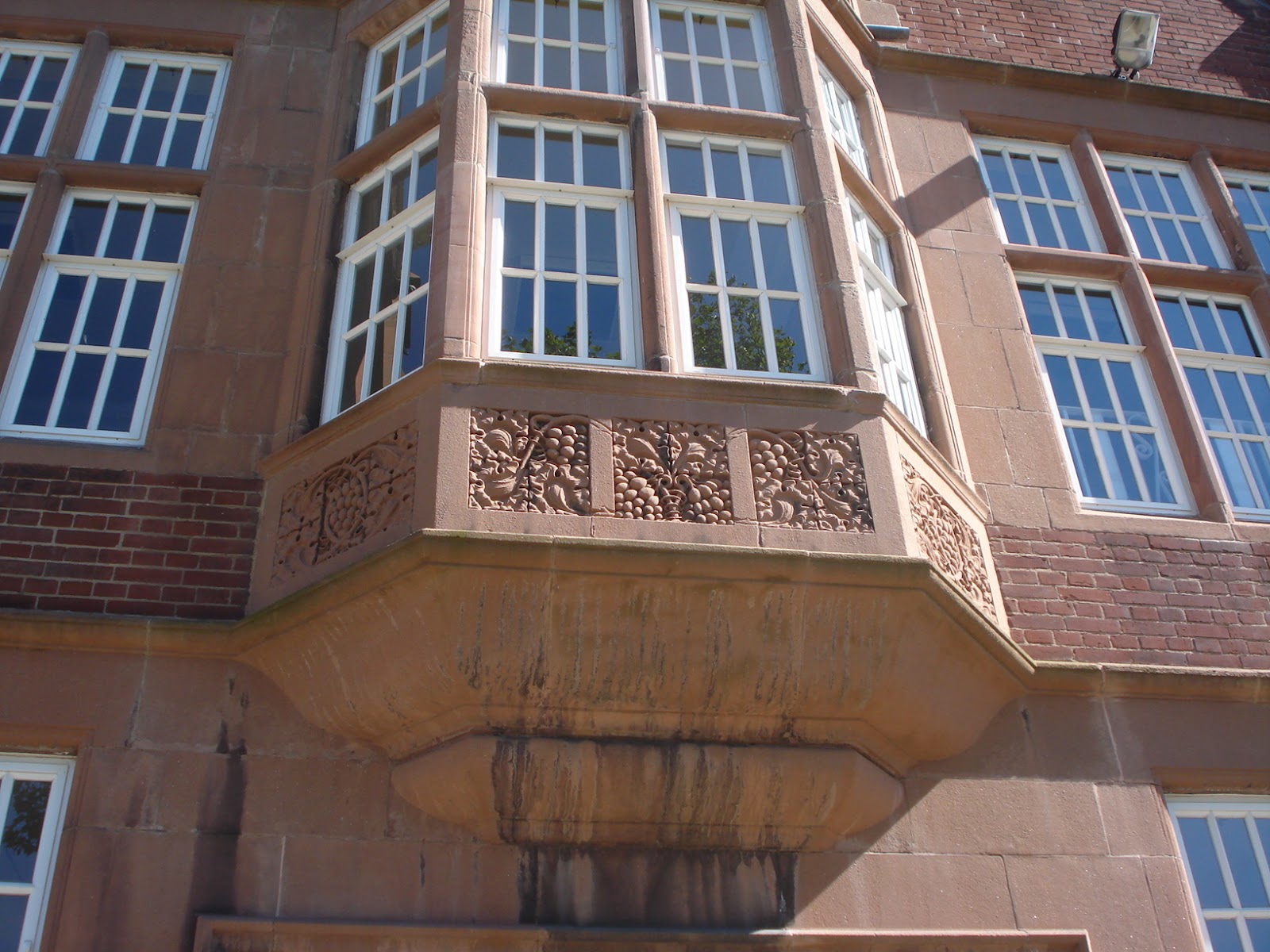 |
| They did try to create the ‘new’ school (now a library) in a period style, with matching red brick and carvings above a bay window. |
After that things become more confusing, but in 1920 Sir Richard Ashmole Cooper (MP for Walsall) bought the estate and what was left of the buildings and gave it to the City of Lichfield – for a new road to ease traffic problems. So The Friary was built across the site of the friary and the last few buildings were pulled down – with the exception of the Bishop’s Lodging, which was built in 1295, and can be seen on the opposite side of the road to the little garden. The medieval house, altered over the centuries, was incorporated into a new school, but today the Bishop’s Lodging, with its large 1920s extension, has become the city’s library.
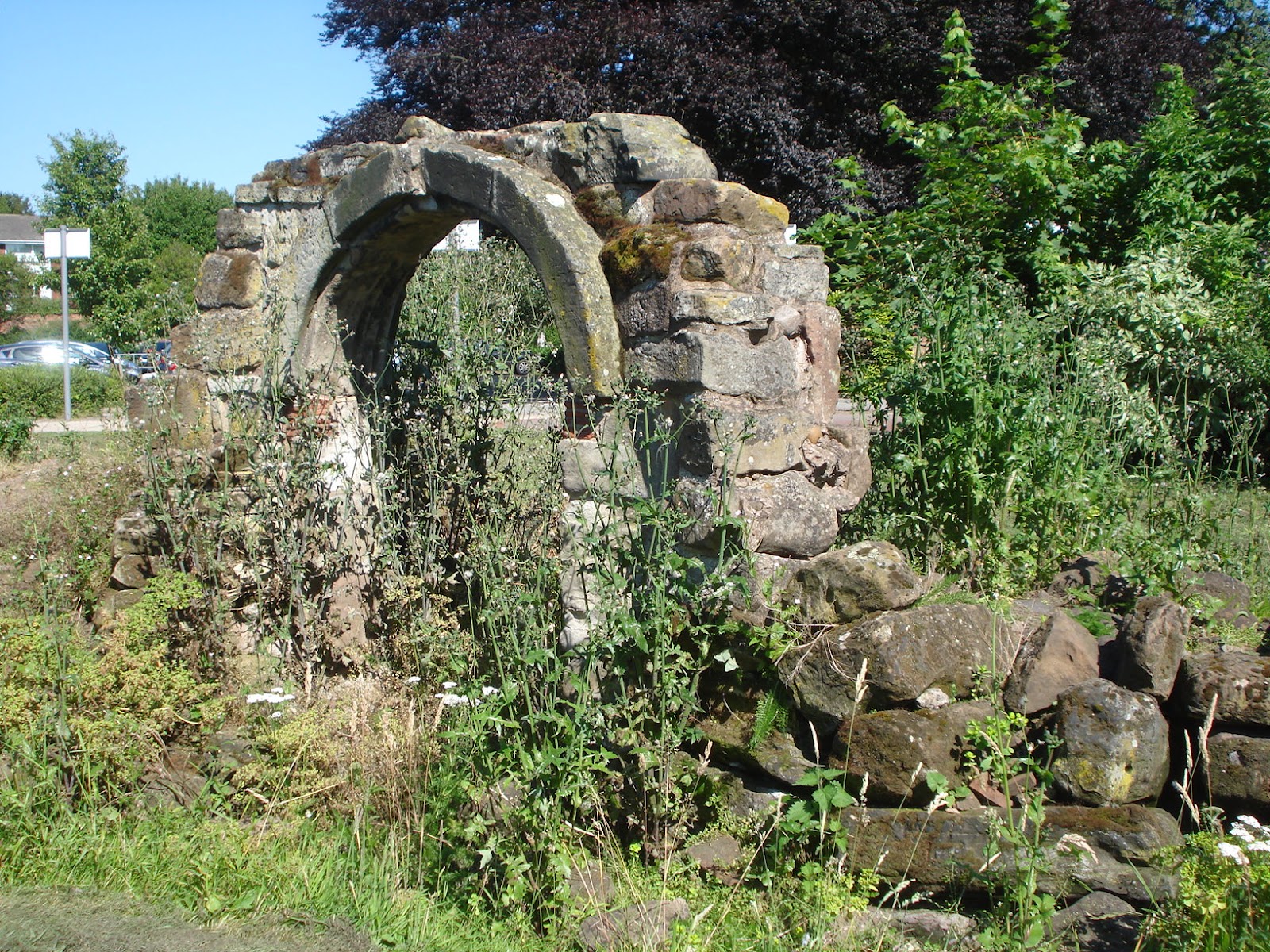 |
| This ruined arch is by the carpark at Lichfield College, next to the Bishop’s Lodging, but there is no sign to indicate whether it is part of the old Friary that once stood on the site. |
All traces of the church could have been lost to development, but the fragments which lie beneath the ground became a Scheduled Ancient Monument following an archaeological dig in the 1930s, and the garden was created, with paving slabs above the cloister and parts of the north wall of the nave. There’s a neo-classical portico is obviously nothing to do with the friary, but creates an imposing entrance.
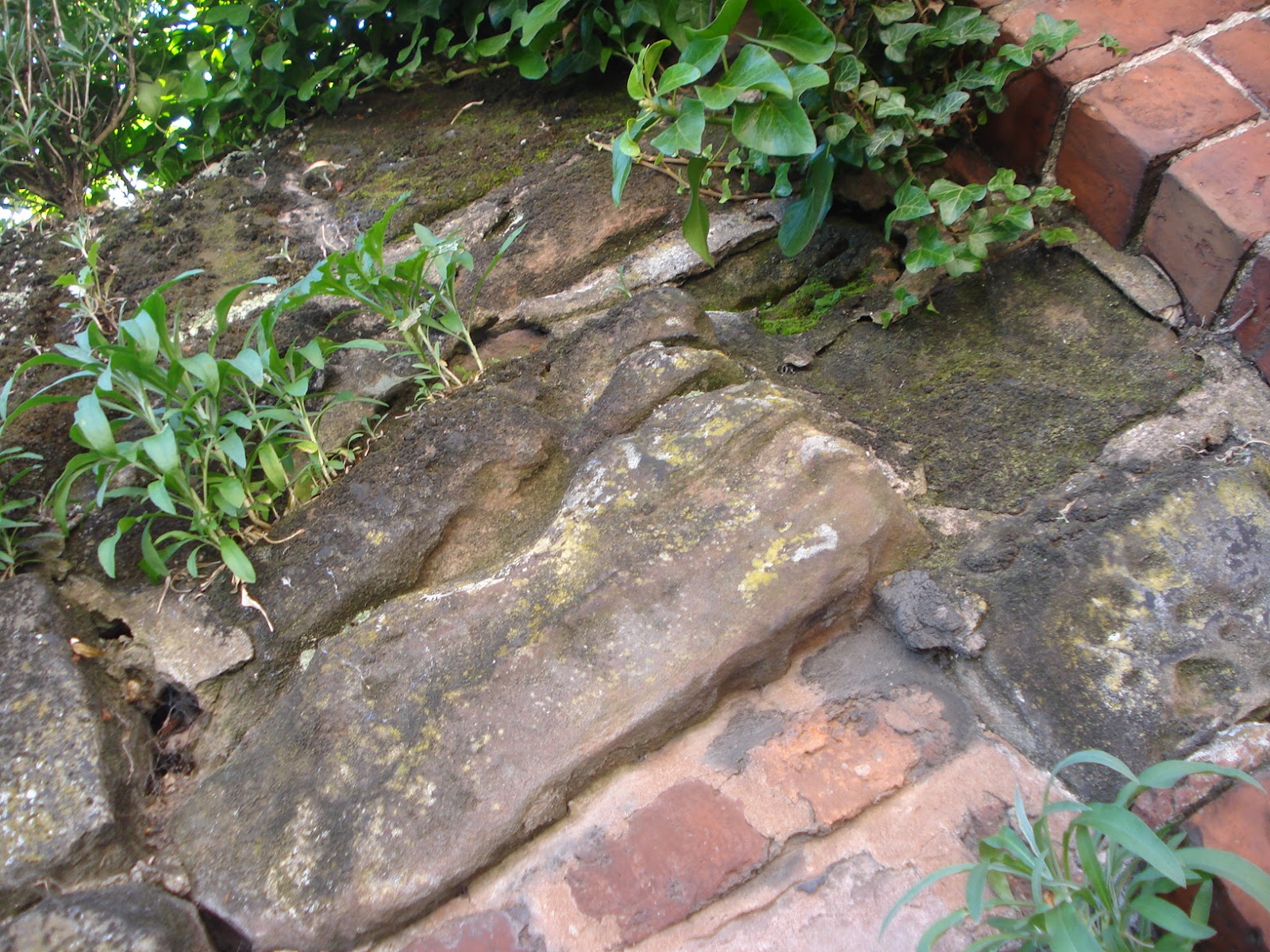 |
| Parts of the original Friary wall can still be seen in Upper St John Street (just around the corner from The Friary). There are quite large sections, which look as if generations of builders have patched the wall up. |
The Friary may have virtually vanished, but its name lives on in Lichfield: there are roads, shops, a school, sports clubs and businesses all called after it. Remnants of the friary wall can still be seen in the area, as successive generations just seem to have covered or repaired them with modern bricks. And there’s a ruined arch, quite close to the Bishop’s Lodging, which is generally thought to be part of the old Friary, but could be a Victorian folly. Information in this post is largely taken from the Victoria County History. For more Saturday Snapshots see Alice’s blog at http://athomewithbooks.net/
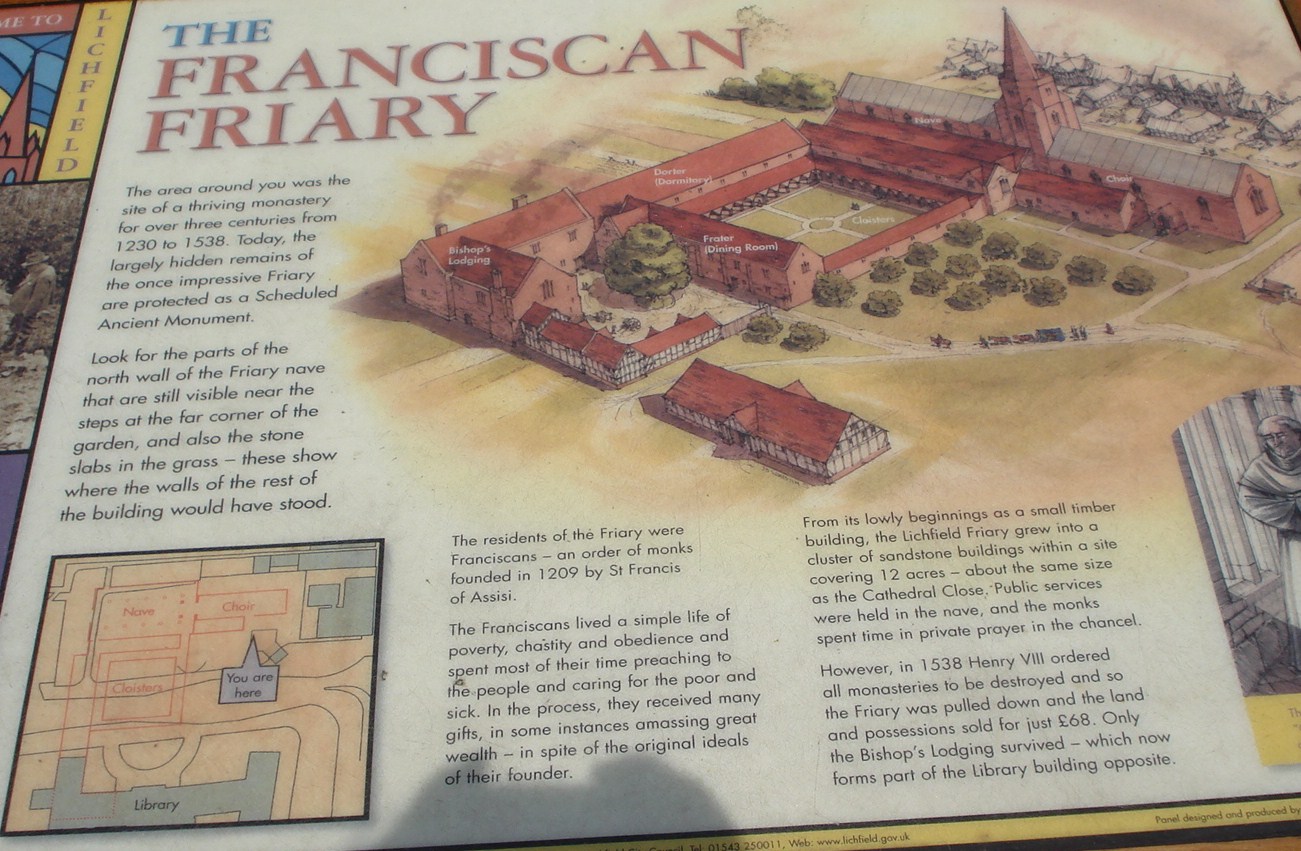 |
| A sign in the gardenss has a diagram and picture showing how the site would have looked. The odd blob at the bottom is my hands holding the camera – the board was a bit high for anyone who is five foot nothing to take a successful picture! |

 The Book Trunk
Leave a reply to Nan Cancel reply