 |
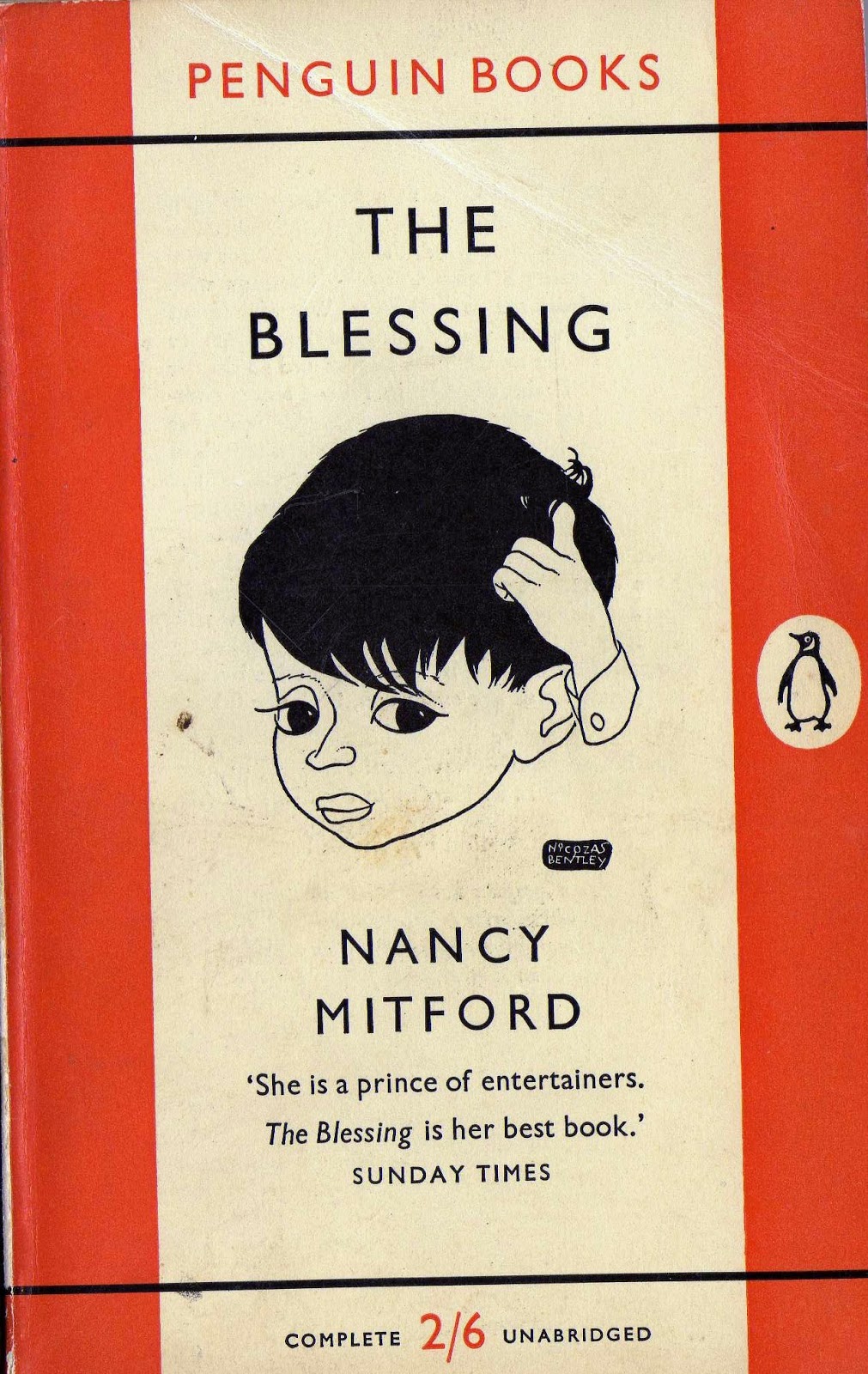
Penguin number 1211, published in
in 1957 – don’t you wish paperbacks
were still two shillings and sixpence? |
It’s wartime London (Second World War that is) and Grace, who who is engaged to Hughie, falls in love with a charming Frenchman. A month later they are married and after a two-week honeymoon he returns to his unit. Their son is seven when Charles-Edouard de Valhubert reappears and whisks her off to France, where he has a country estate in Provence and a luxurious home in Paris, both packed with assorted relatives, antiques and paintings.
Initially all seems well as Grace, who is beautiful but dim, slowly becomes accustomed to marriage and French life. However Charles-Edouard is not so enthusiastic about being tied down, and continues his liaisons with at least two other women. When he is eventually discovered ‘in flagrante’ Grace returns to England, and the couple’s young son realises he can manipulate the situation to his own advantage – but only if he keeps his parents apart…
Now this may regarded as sacrilege by her many fans, but personally I think The Blessing, by Nancy Mitford, is the chick-lit of its day. Set in the aristocratic world she knew so well, it’s written in sparkling, witty prose, and is very light-hearted, very frothy, and rather stylised – for some strange reason I kept viewing it as a stage comedy with a few near-farcical moments. However, the story is slight, there are no great insights into the human condition (not that this is a requirement for novels), and the characters have no depth – they are stereotypical portraits rather than fully rounded characters, and I wonder how credible they would have seemed when the novel was published in 1951.
Charles-Edouard never really comes to life – he’s a wealthy, aristocratic Frenchman, with a passion for women, and sees nothing wrong with his lifestyle. His friends and family agree that this is the French way, and his wife must accept the situation.
Grace is remarkably passive on the whole, and is required to do nothing more than look beautiful, which is just as well really, because she has no hobbies, doesn’t read, takes no interest in current affairs, and plays no part in running Charles-Edouard’s homes. She’s really rather boring, and doesn’t even spend much time with her son, preferring to leave him with Nanny.
The son, Sigismond (Sigi for short), is the ‘Blessing’ of the title and is a monstrously precocious little brat who doesn’t really speak or behave like a small boy. He is, I think, the most un-childlike child I have ever encountered in the realms of fiction or reality.
However, obnoxious Sigi is, I can’t blame him for his machinations when his parents separate, because after being ignored he suddenly finds himself the centre of attention as they each spend time and money on him. And their suitors also produce lavish (and sometimes inappropriate ) gifts, so Sigi is not keen for Grace and Charles-Edouard to get together with each other, or with anyone else. He richly deserves the box on the ears he finally receives when his parents’ eyes are opened, and all ends as happily as it should.
A host of other characters flit in and out of the story. There is Nanny, of course, who hates all things French, but misses them when she is back in England, and Albertine Marel-Desboulles, Charles-Edouard’s intelligent and cultured older mistress, who I thought was a much more intesting charcter than Grace, and her young rival Juliette Novembre de la Ferte. And then thre is Grace’s old schoolfriend Carolyn, married to clever, opinionated American Hector Dexter: the couple move in the highest diplomatic and political circles – but they are not quite what they seem.
It may not sound like it, but I did enjoy reading this, although it didn’t stay in my mind afterwards, and I’m not sure I would read it again – unlike Mitford’s ‘The Pursuit of Love’ and ‘Love in a Cold Climate’, which are both old favourites which I’ve read and re-read over the years.
 |
| Nancy Mitford. |


 The Book Trunk
Leave a reply to Cath Cancel reply