 |
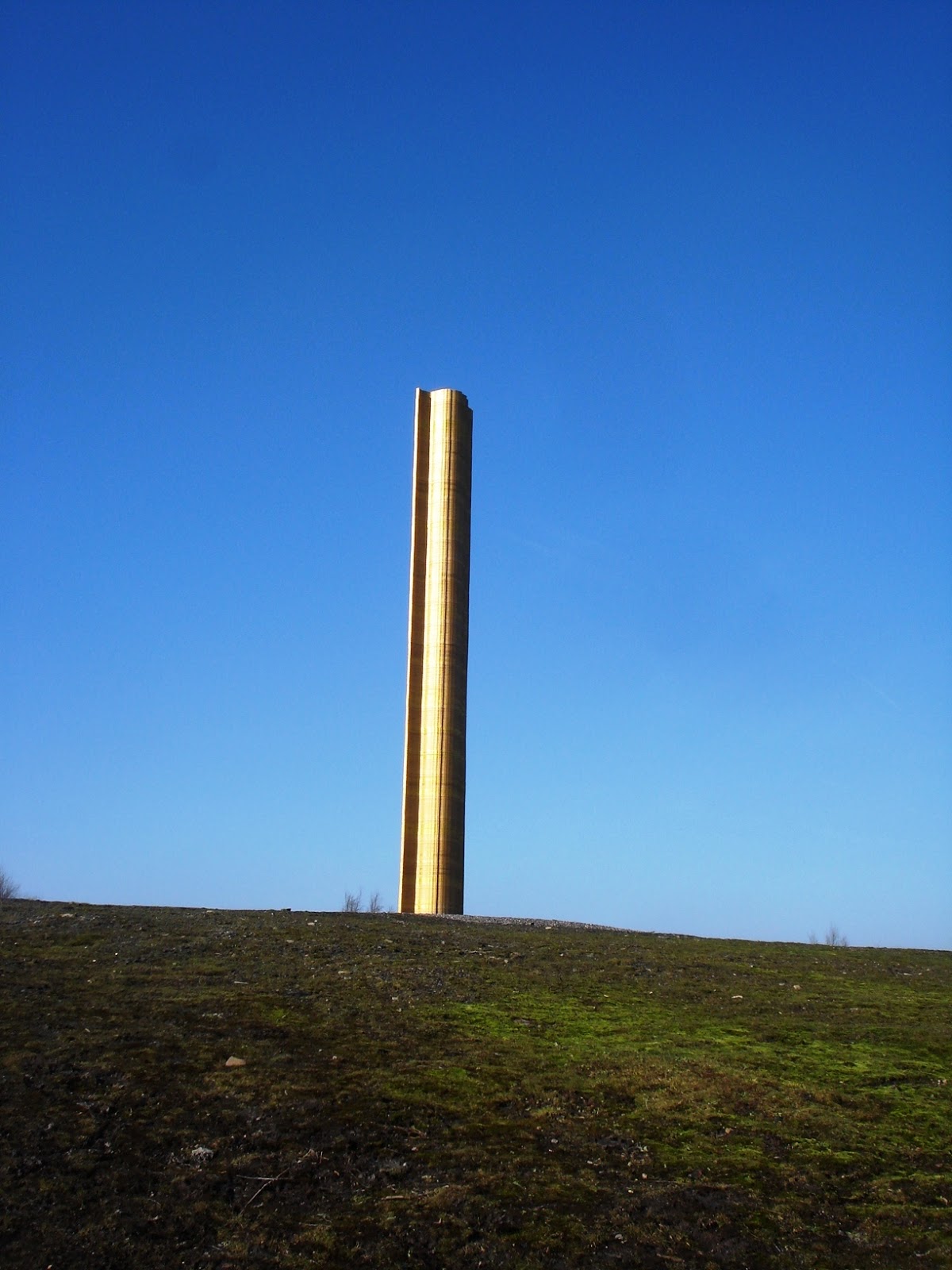
| Gold Leaf: Buried Sunlight.. This sculpture on the top of an old coal mining spoil heap has proved controversial – do you like it? |
This golden pillar – ‘Gold Leaf: Buried Sunlight’ – stands on the top of a spoil heap at a long-closed coal mine at Polesworth, just up the road from where I live. The artwork, which is just over 39 feet tall, symbolises the regeneration of nature in the area, which is now a kind of nature reserve, known as Pooley Country Park. The Man of the House and I walked round there on Sunday, so it seemed the obvious choice for this week’s Saturday Snapshot. From a distance the structure looks like a conventional classical column, but it’s actually shaped like a birch leaf (though unless someone told you this you would never know), and is made of layers, with thousands of leaf shapes all neatly stacked, reflecting the way aeons of ancient plants were compressed into layers, forming seams of coal which were hewn from the earth to provide the energy which powered industry and kept homes warm.
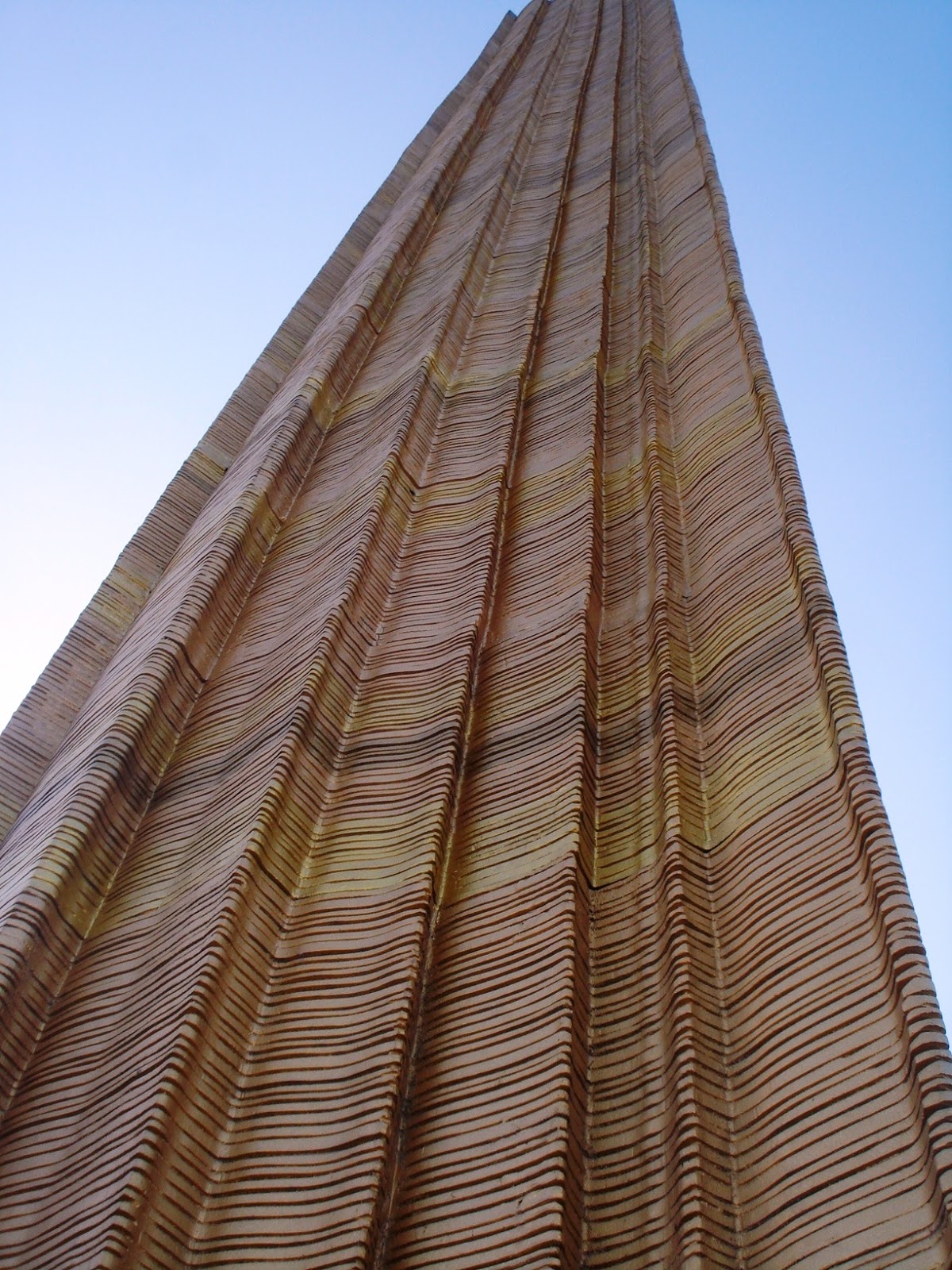 |
| A close-up, showing the layers and serrated edge. |
Cast in aluminium, it’s covered in gold leaf, in several different shades, echoing the autumnal colours of fallen birch leaves in autumn, and is a reminder that silver birches were among the first trees to grow here after the colliery closed some 50 years ago, the seed carried by birds or wind I suppose. Many more have now been planted, and they thrive in the poor in the poor soil, creating mulch where other species have taken root and all sorts of wildlife have become established.
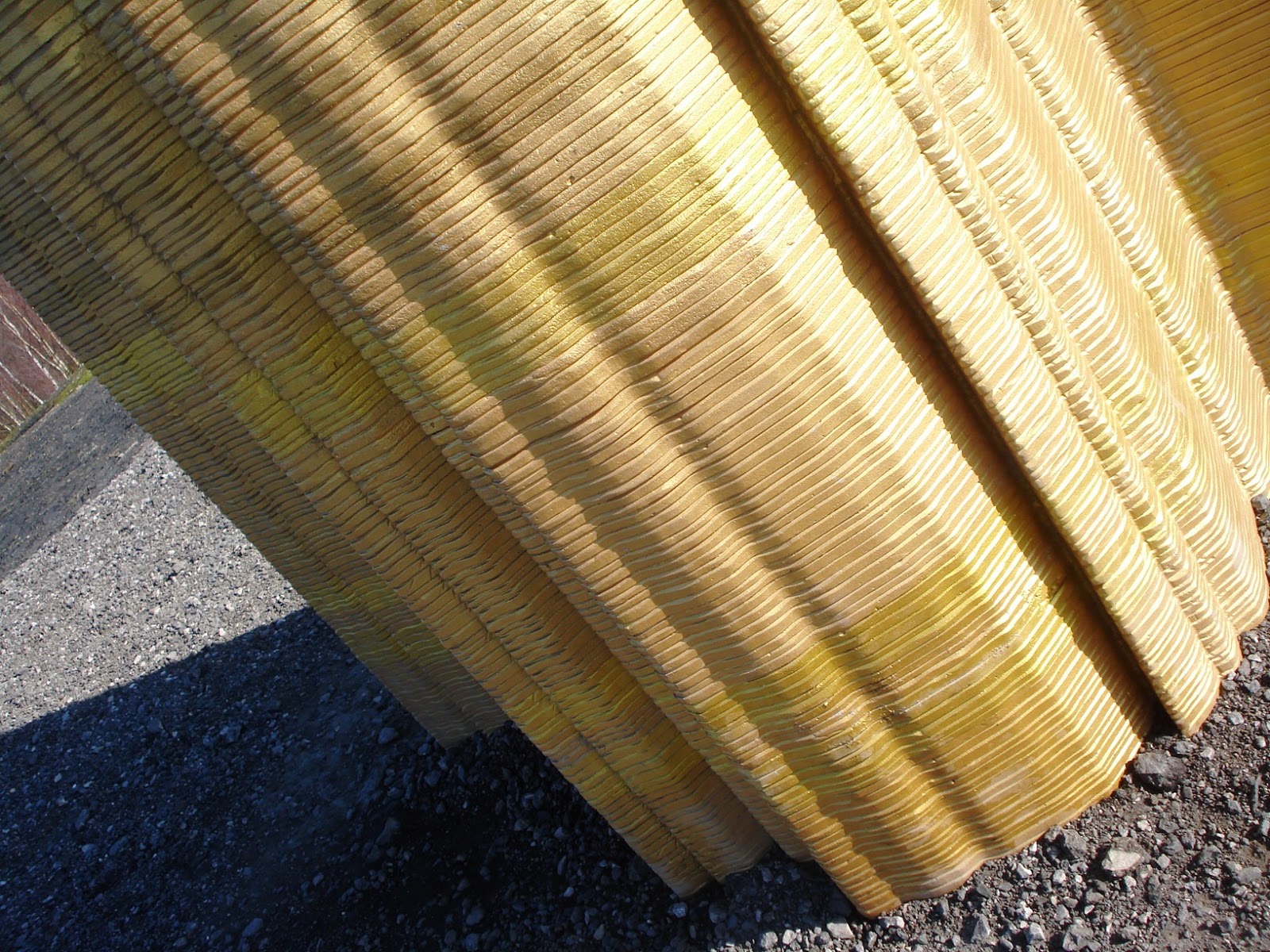 |
| The base, shining against the dark stones on the surface. |
The pillar, which was erected about 18 months ago, was created by artists Matthew Dalziel and Louise Scullion, who were intrigued by the idea of alchemy and transformation as sunlight turns leaves to carbon, and their tower of leaves shines out across the landscape, a stark contrast to the dull, dark grey stones of the spoil heap. It’s become a controversial landmark: local people were involved in selecting a piece of public art, but many residents don’t like this, claiming it is intrusive and out of keeping with the village and surrounding countryside. Personally I’ve got some sympathy with them, and I’m not sure I really like ‘Gold Leaf: Buried Sunlight’, although the more I find out about it, the more it grows on me. To be honest, I like the concept much more than the actual sculpture, and I think you need to know something about the symbolism to understand it, even if you don’t appreciate it. An information board would help, or some details on the map which guides you round the site – I did look, but I couldn’t find anything.
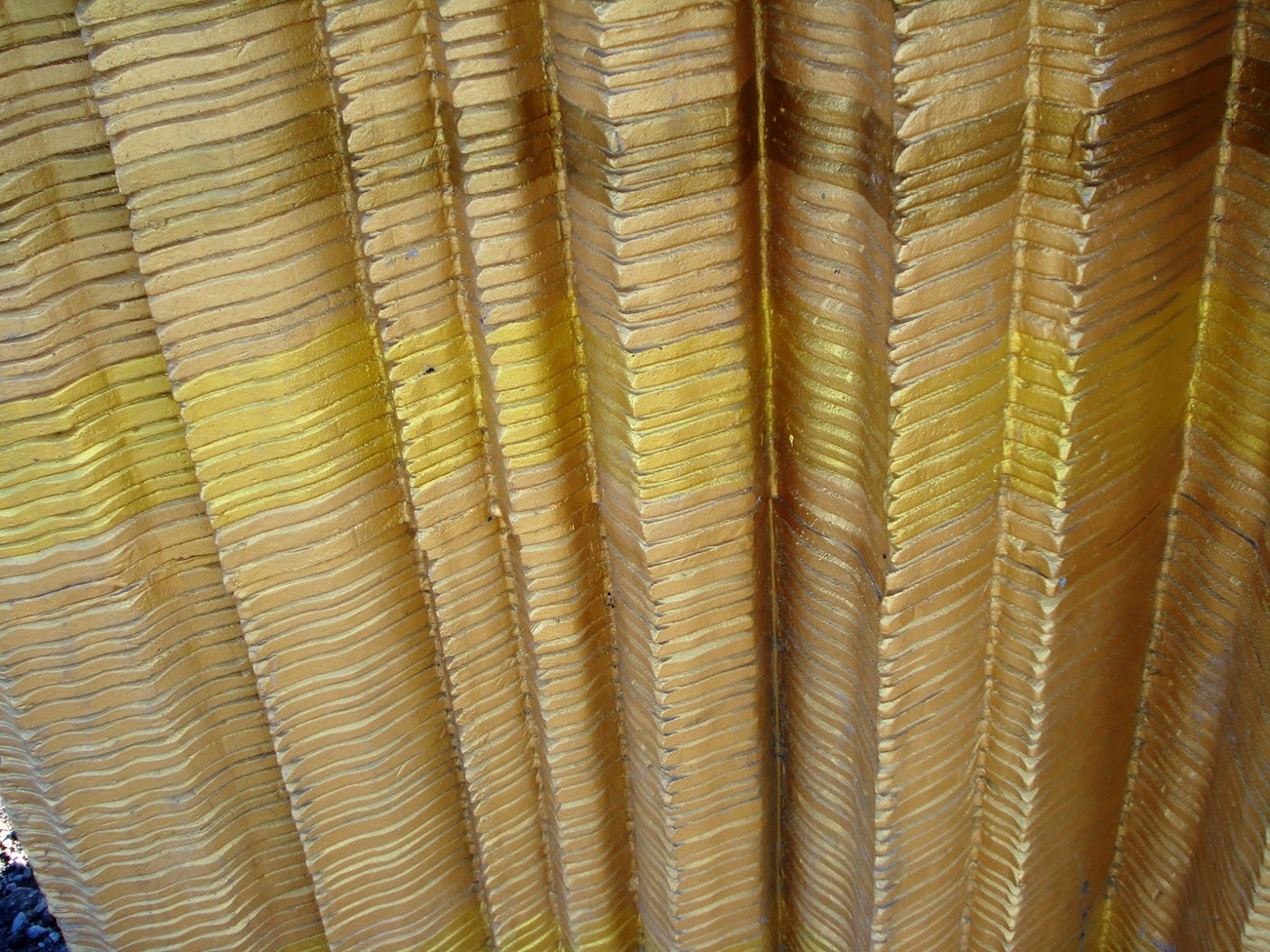 |
| And another close-up. |
This post is really about the sculpture, as the park (owned by Warwickshire County Council) is so fantastic it deserves a separate post, but I must mention the poems written by local people, which are inscribed on metal plaques all around the area, and there are pools formed when land collapsed deep underground, and trees, and fantastic views of the countryside, as well as a canal-side walk and a tearoom with displays and information about miners and the of the pits that existed here.
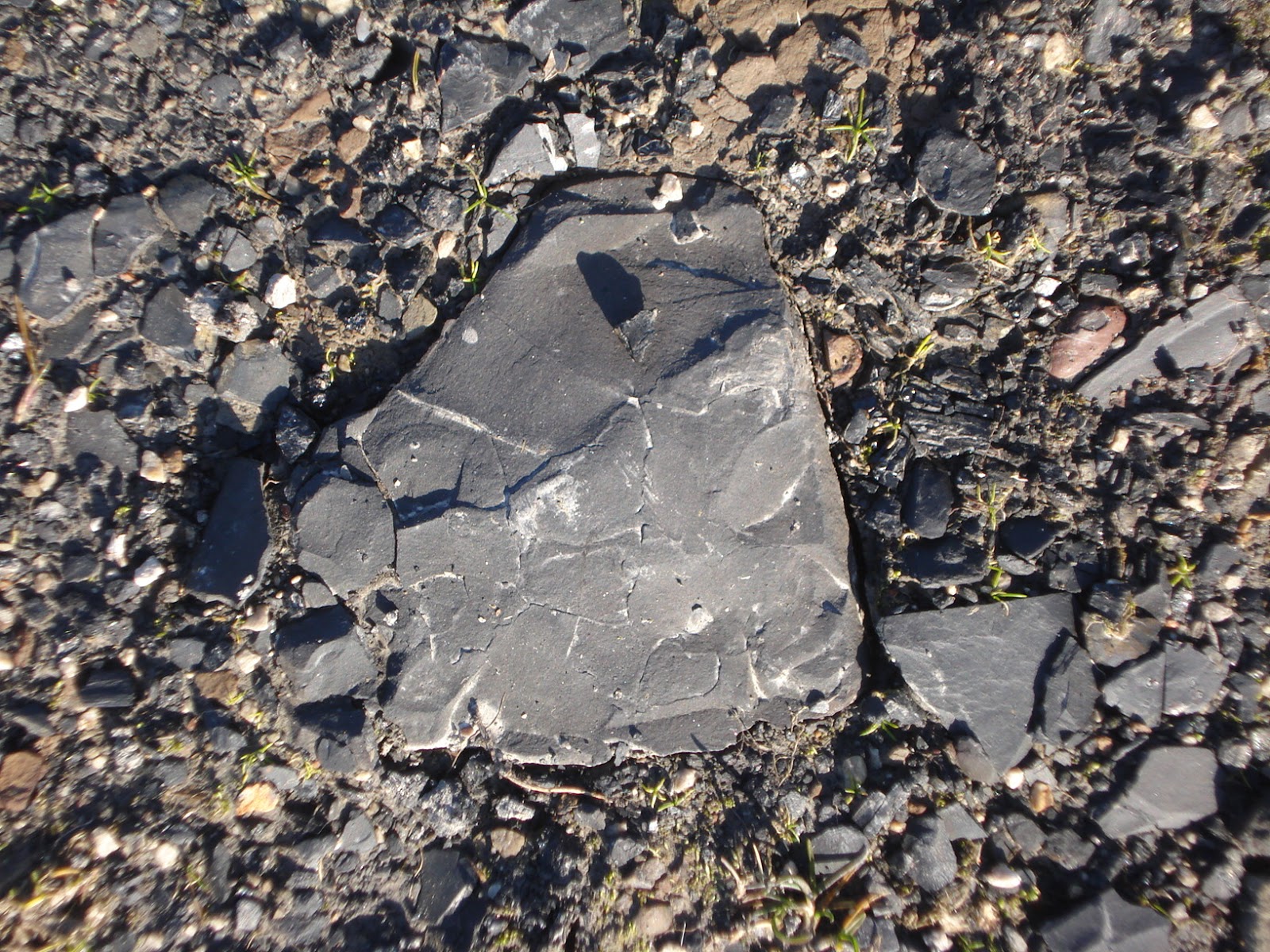 |
| The bare stones around the base of the art-work. |
The whole place is a tribute to the coal miners who worked here, showing that it really is possible to transform land scarred by industrial processes (and what is coal mining if it’s not industrial?) into something vital, alive – and very beautiful. It’s a small area, less than a mile long and quite narrow, but man has worked with nature to create something very special, and I was surprised to see how plants had taken hold of the most barren-looking areas. Even the lower slopes of the stony spoil heap are covered in a carpet of mosses and lichens, and several rare species of plants and insects are thriving in the park.
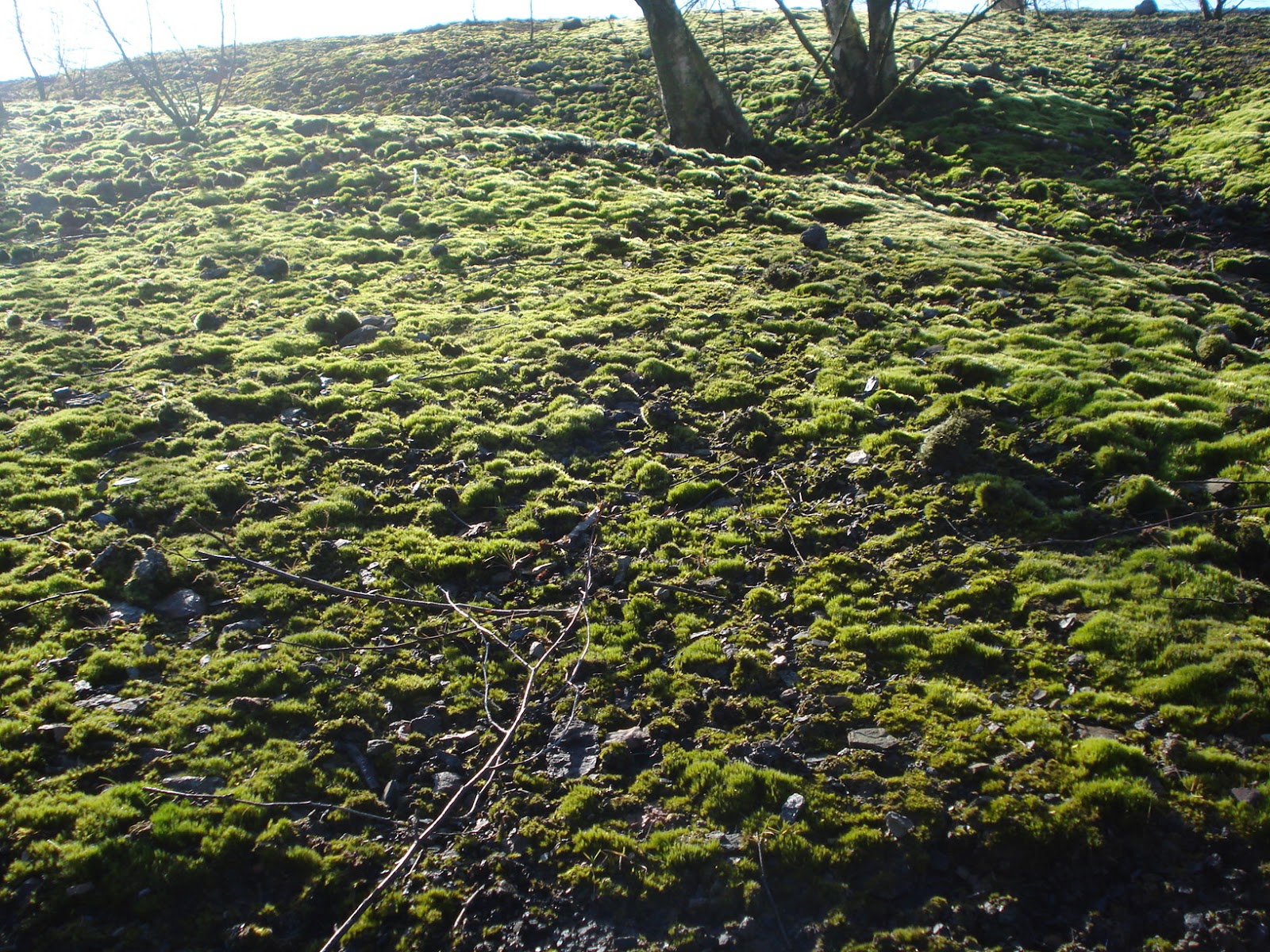 |
| A carpet of moss is covering the spoil heap. |
There’s been a tremendous input from the local community, and the area seems to be well used but, sadly, it is threatened by the line of HS2 – the high-speed rail route which will link Birmingham with Manchester and Leeds.
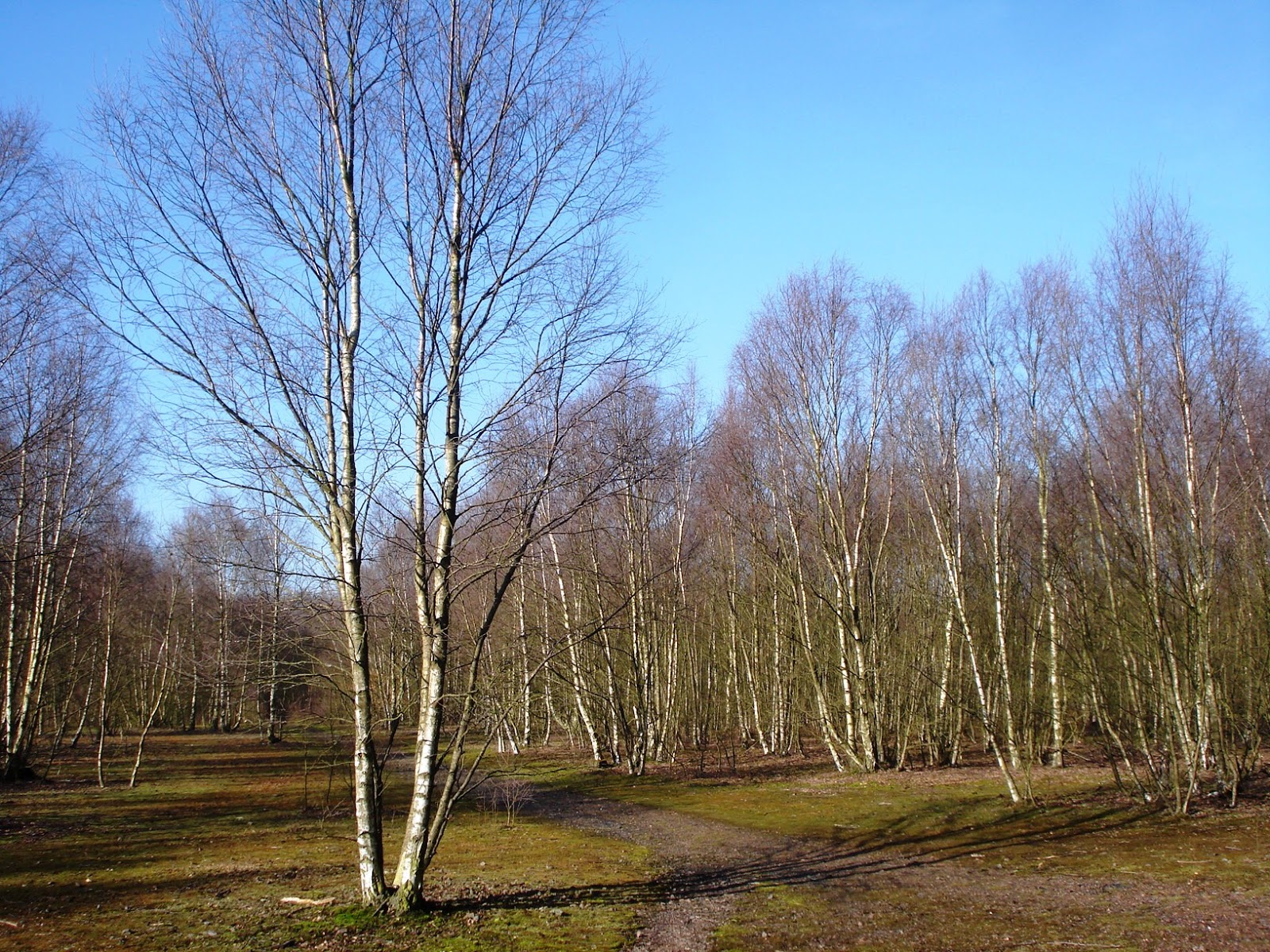 |
| Silver birches as far as the eye can see. I tried taking photos of fallen birch leaves, but they were not clear enough to use. |

 The Book Trunk
Leave a reply to bettyl Cancel reply