 |
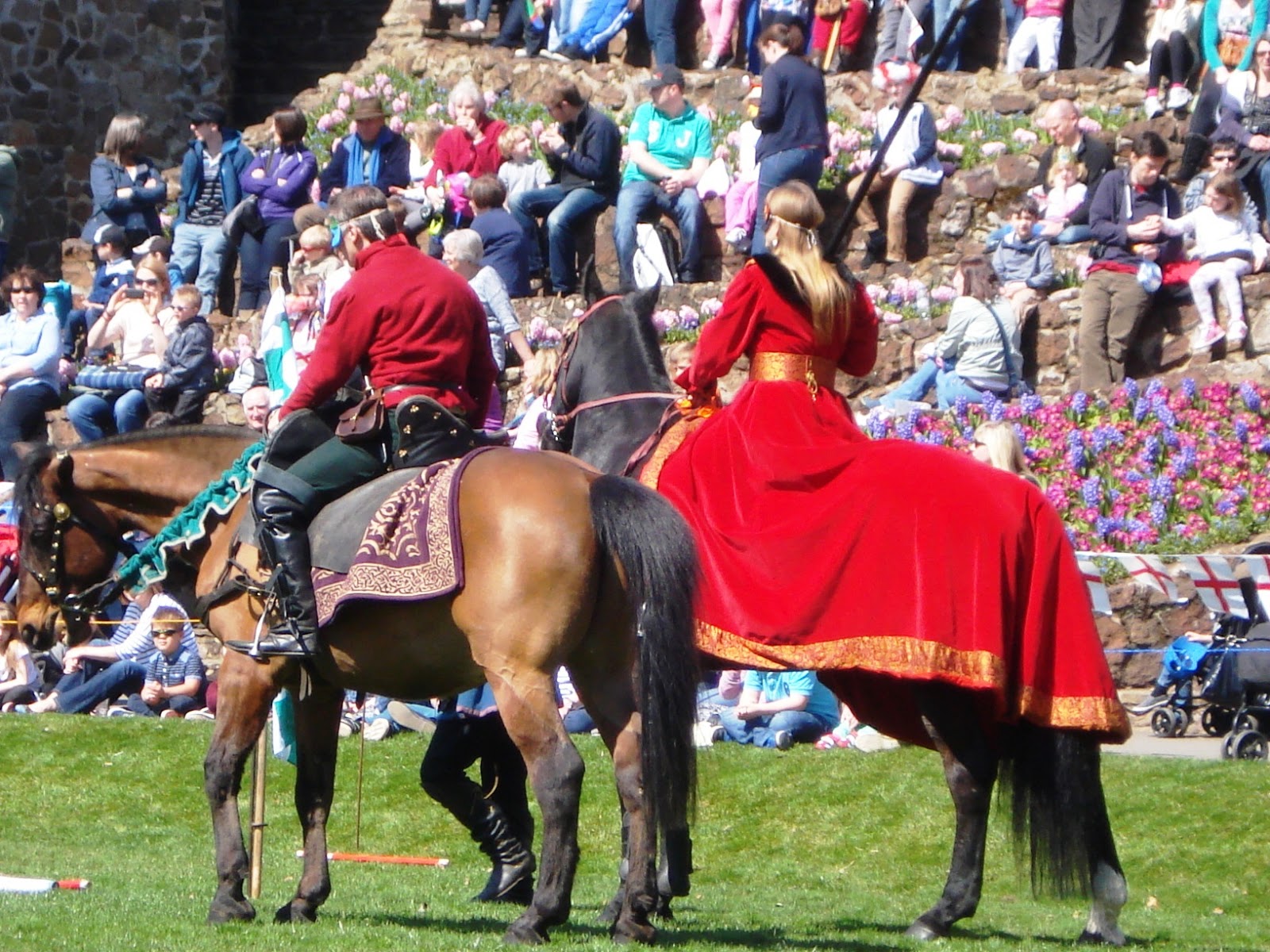
| Medieval mystery and glamour provided a colourful spectacle. |
Yesterday Younger Daughter came to stay, to hear the Man of the House singing at the Folk Club, where he was the Support Act for the Guest Group, so this morning when she headed for the station on her way back home I walked into town with her, and we found everything decorated for St George, and the most wonderful Extravaganza going on the Castle Grounds. We’d both completely forgotten that April 23 is the Feast Day of England’s Patron Saint, and his the anniversary is celebrated on the nearest Saturday.
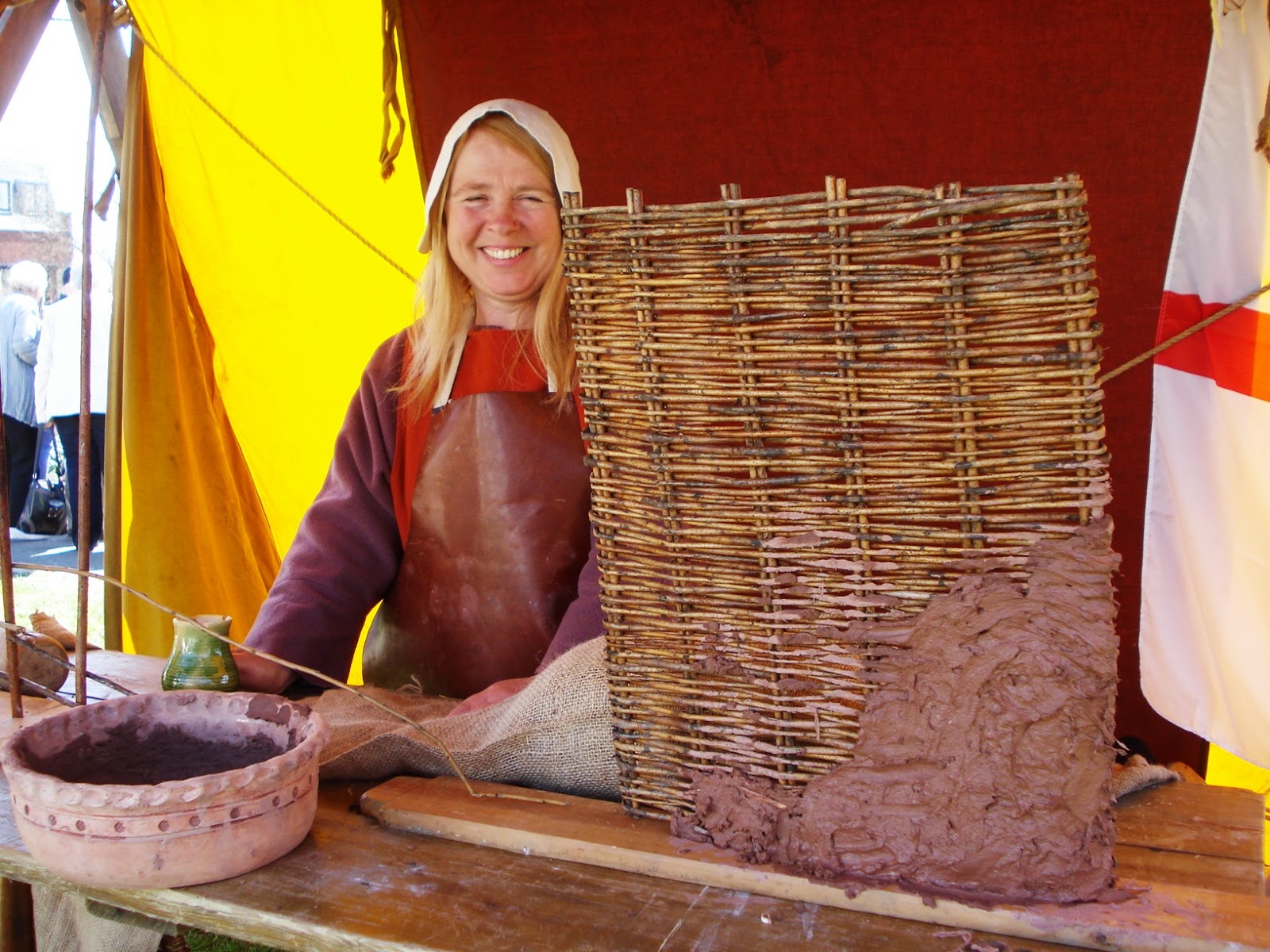 |
| A wattle frame, made from hazel uprights, with willow woven across, and a mixture of clay, sand and straw daubed over it. Sometimes, apparently, they used animal dung! |
It seemed as everyone had decided to join in the fun – perhaps because the weather was so glorious: the sun shone from a clear blue sky, and it was so warm we took our jackets off (for the first time this year). St George’s Flag (a red upright cross on a white background) was flying from the Castle, and bunting was strung across railings and wound around the Bandstand. There was traditional jousting, and a re-enactment of St George’s exploits with dragon (with a twist provided by the princess), with all kinds of other entertainment laid on by a group of enthusiasts who pitched Medieval-style tents and set up a 15th Century recruiting camp, and the air was thick with woodsmoke from their fires – a smell which always reminds me of the autumn bonfires everyone lit in their gardens when I was young.
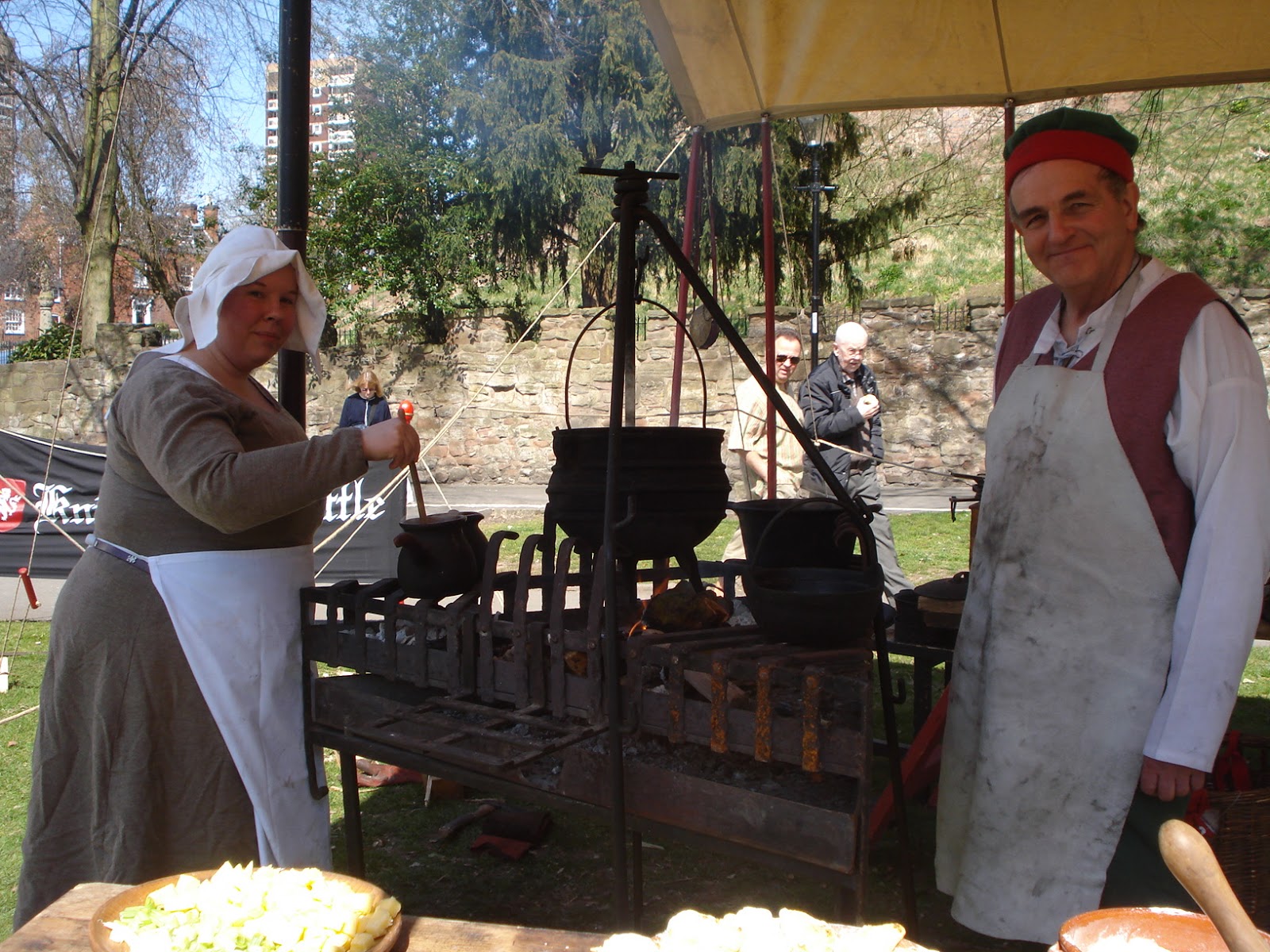 |
| ‘Cookers’ like this were once top-of-the-range, must-have kitchen equipment. Even though they were essentially open fires, they enabled people to cook in a large central cauldron, with three or four smaller pots in the corners around the edge. |
The re-enactors were all tremendously knowledgeable about their field of expertise, and only to happy to demonstrate their skills and tell visitors about life in the 14th Century. So we saw birds of prey, learned how wattle and daub walls were made, and shuddered at the horrors of Medieval medicine. We looked on in wonder as a ‘knight’ donned his armour, enjoyed a lovely chat about cooking with a couple offering a glimpse into a Medieval kitchen, and were amazed to discover how many different types of arrow were available, depending on whether you you were shooting birds for food, or aiming to bring down a horse in battle, or kill a man, or start a blaze. in enemy territory.
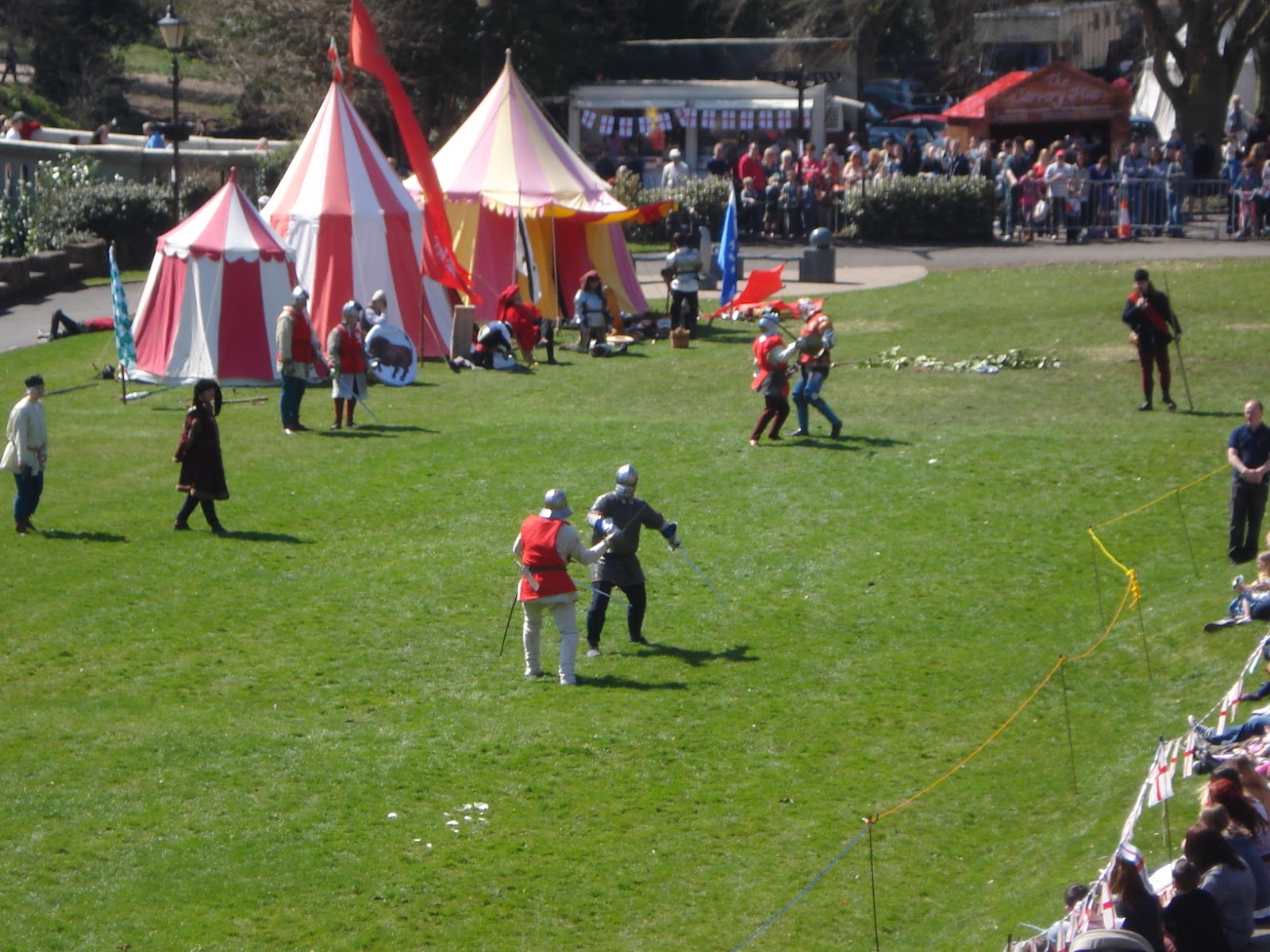 |
| Bright, striped pavilions on the Lower Lawn provided a colourful backdrop for knightly fighting. |
There were masses of things for children to do, including making clay pots, trying on armour, and shooting with a bow and arrow, and you could tour round the Castle for just £3, which is less than half the usual price. It’s a long time since we’ve been round the Castle, and The Man of the House (who walked into town to join me after YD went to catch her train) was quite keen on the idea – until he saw the length of the queue waiting to get in! So we decided to go some other time instead.
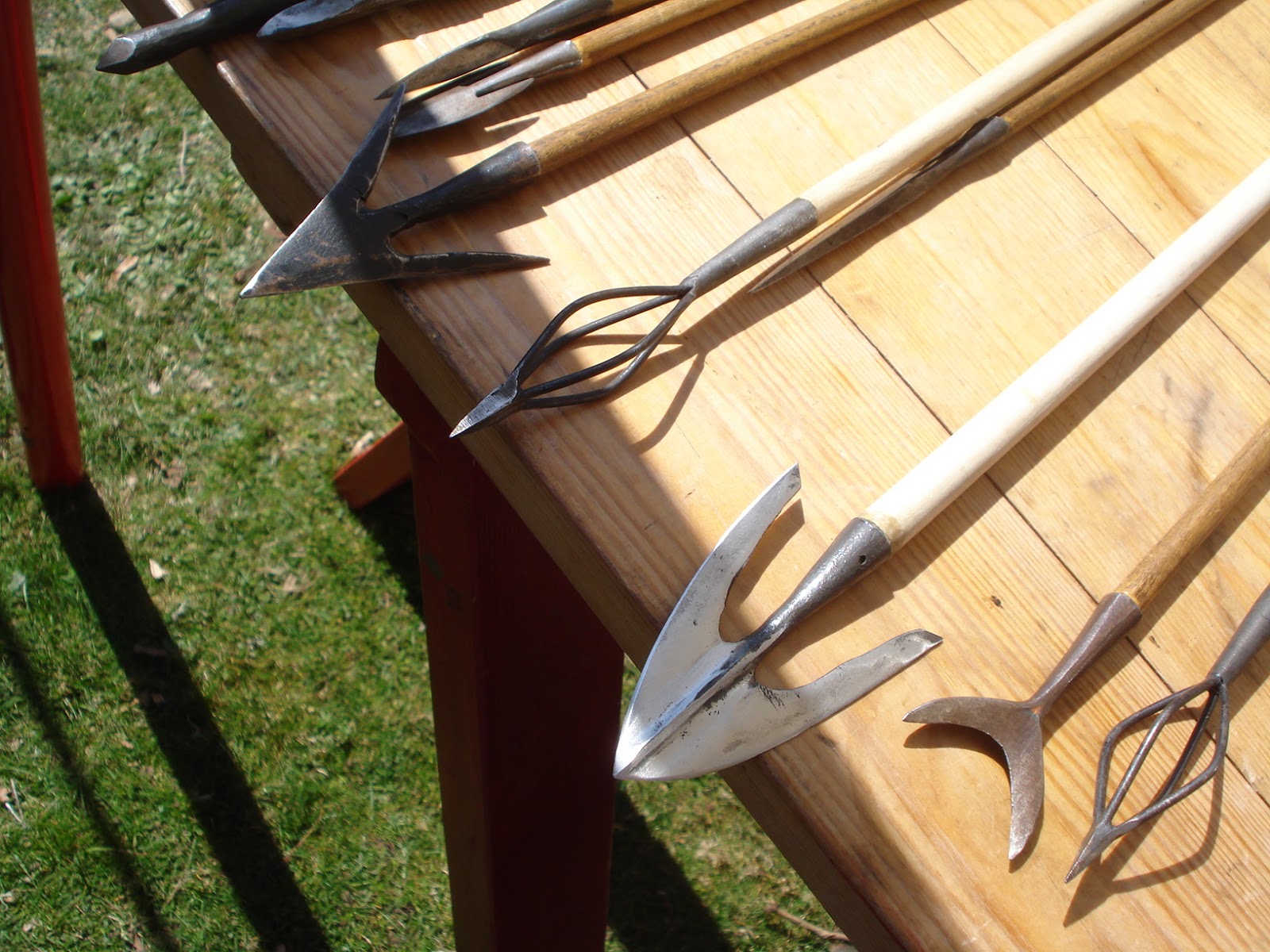 |
| Some of the arrowheads on display – I think there must have been a couple of dozen altogether – and they certainly look as if they could inflict a lot of damage. |
It really was a lovely day, and I took lots of photos, so I’m posting a few here for this week’s Saturday Snapshot, and I hope they convey a little of the atmosphere.
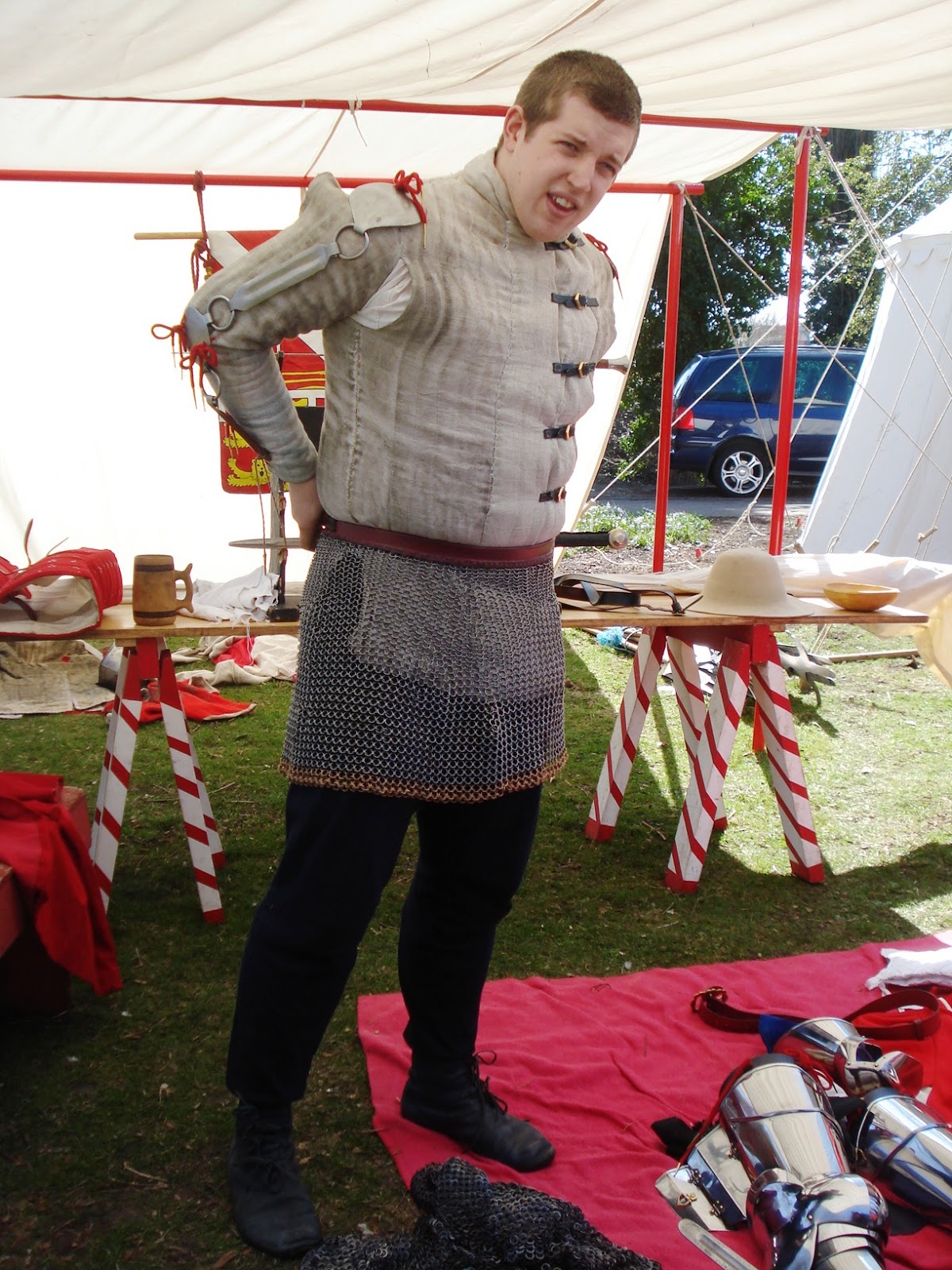 |
| A young soldier donning padded under-garments before putting his armour on. |
By the way, according to legend, St George rescued a beautiful Princess from a dragon which ravaged the land (somewhere in Libya, I believe). As he led the tamed beast away he told people it would never bother them again, so long as they put their faith in Jesus and were baptised – so they did and they were! Sadly, however, poor old George lost his life during the Emperor Diocletian’s fearsome persecution of Christians in the early fourth century.
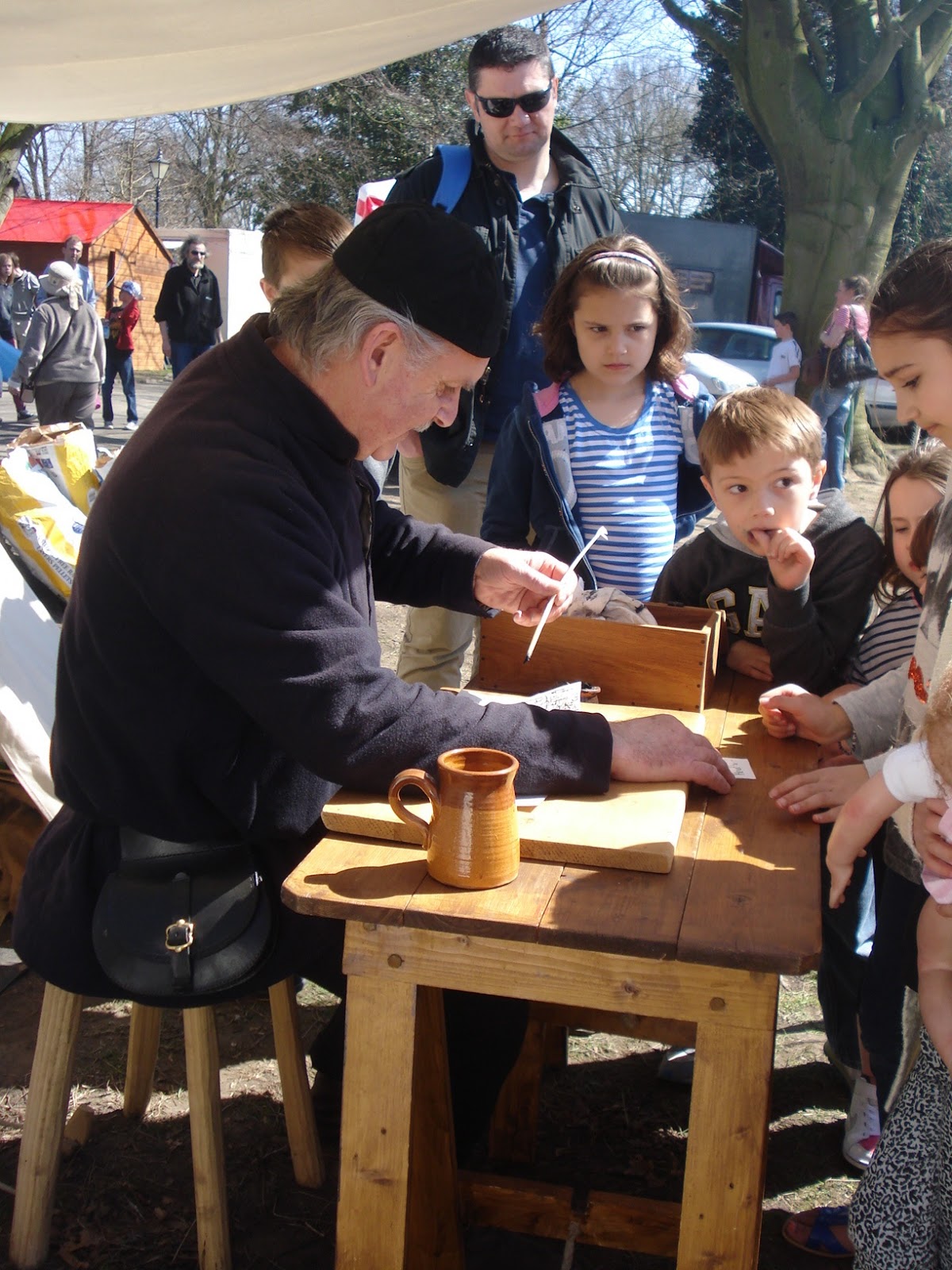 |
| Youngsters queued up to try their hand at writing with a quill. People didn’t use whole feathers, because it would be too unwieldy, and it’s only the central which is needed, so the feather was trimmed back. |
His victory over the dragon is seen as the triumph of good over evil, and the beast is usually interpreted as being a personification of evil, or a symbol of paganism. The truth of his story has been questioned, but he continues to be venerated by Christians in various denominations and, apparently, by Moslems, and I think it is rather nice that people of different faiths agree on this.
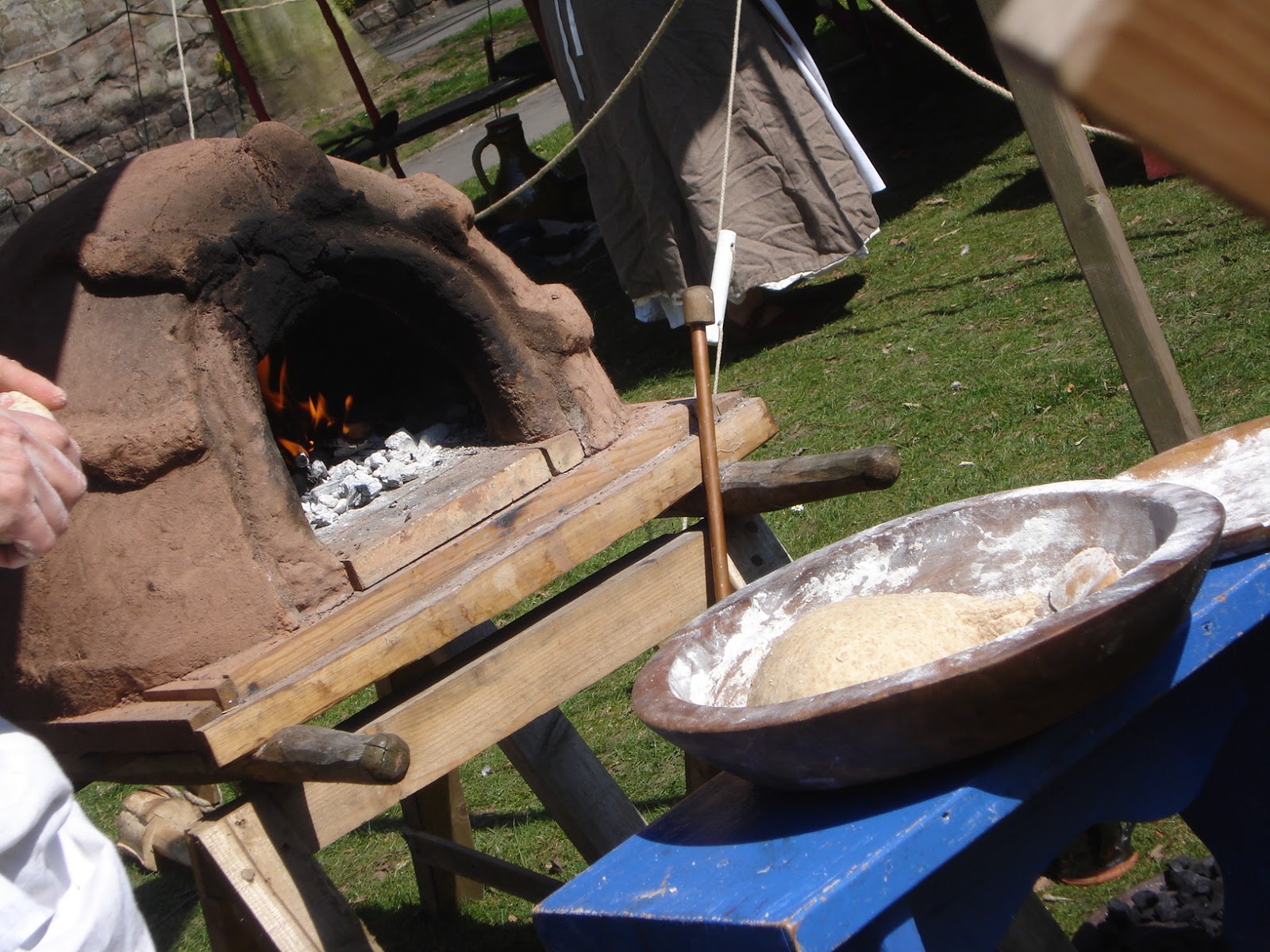 |
| Bread was baked in clay ovens, similar to the pizza ovens some people install in their gardens. |
If you want to see more Saturday Snapshot photos from other participants, the weekly posts are hosted by Alyce, over at http://athomewithbooks.net/http://athomewithbooks.net/2013/04/saturday-snapshot-april-20/
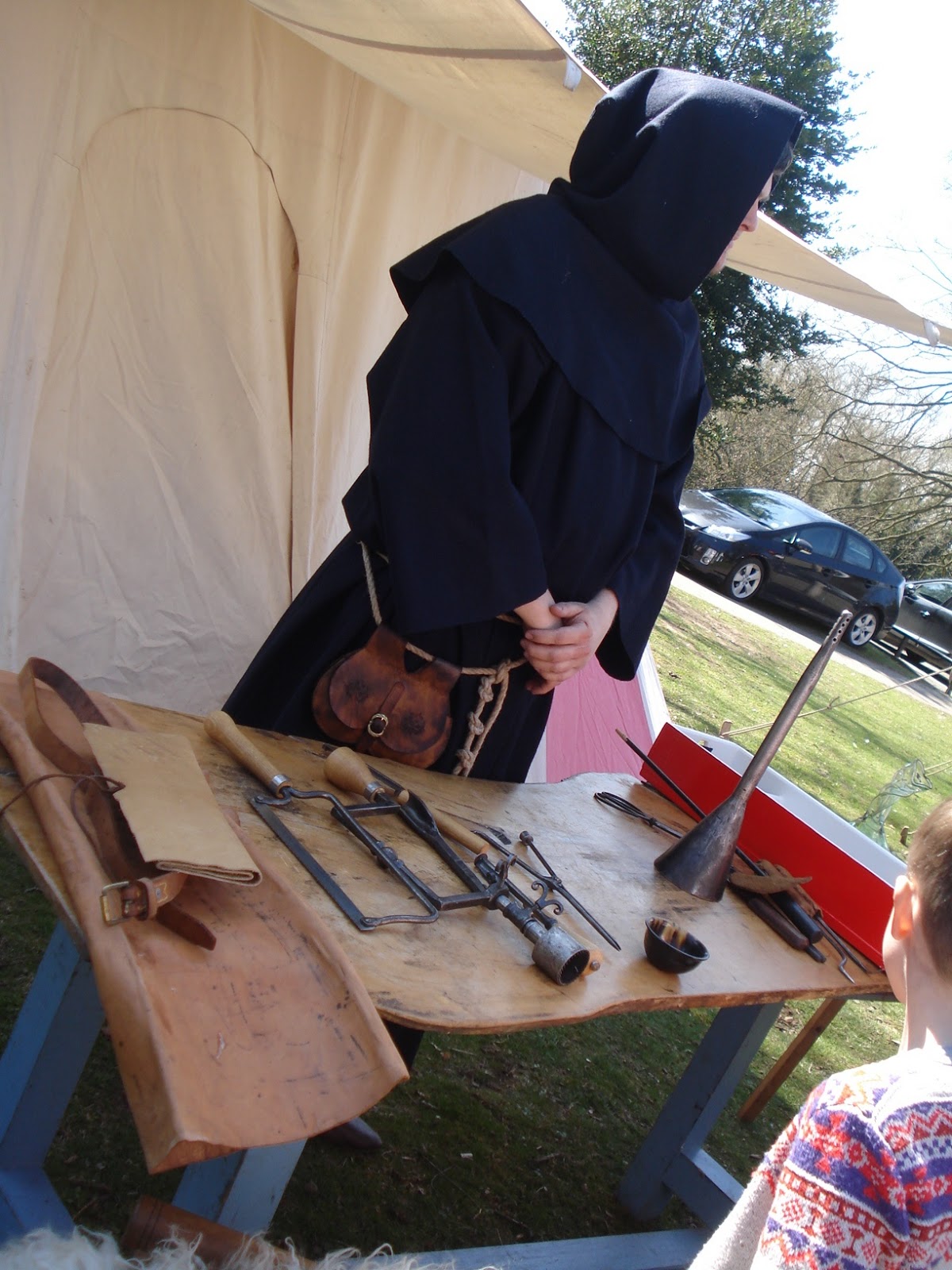 |
| These scary implements were used by doctors, and the medical gentleman pictured (who said he carried out lots of blood letting) looks pretty frightening in those dark clothes. |

 The Book Trunk
Leave a reply to Alyce Cancel reply