Well, it’s September, and gardens, hedgerows, fields and woods seem to be full of flowers, grasses, trees and bushes, all producing seeds to ensure the survival of the species, so for the this month’s Gardening Gaze I’ve been looking to see what the experts recommend on the subject of Seeds.
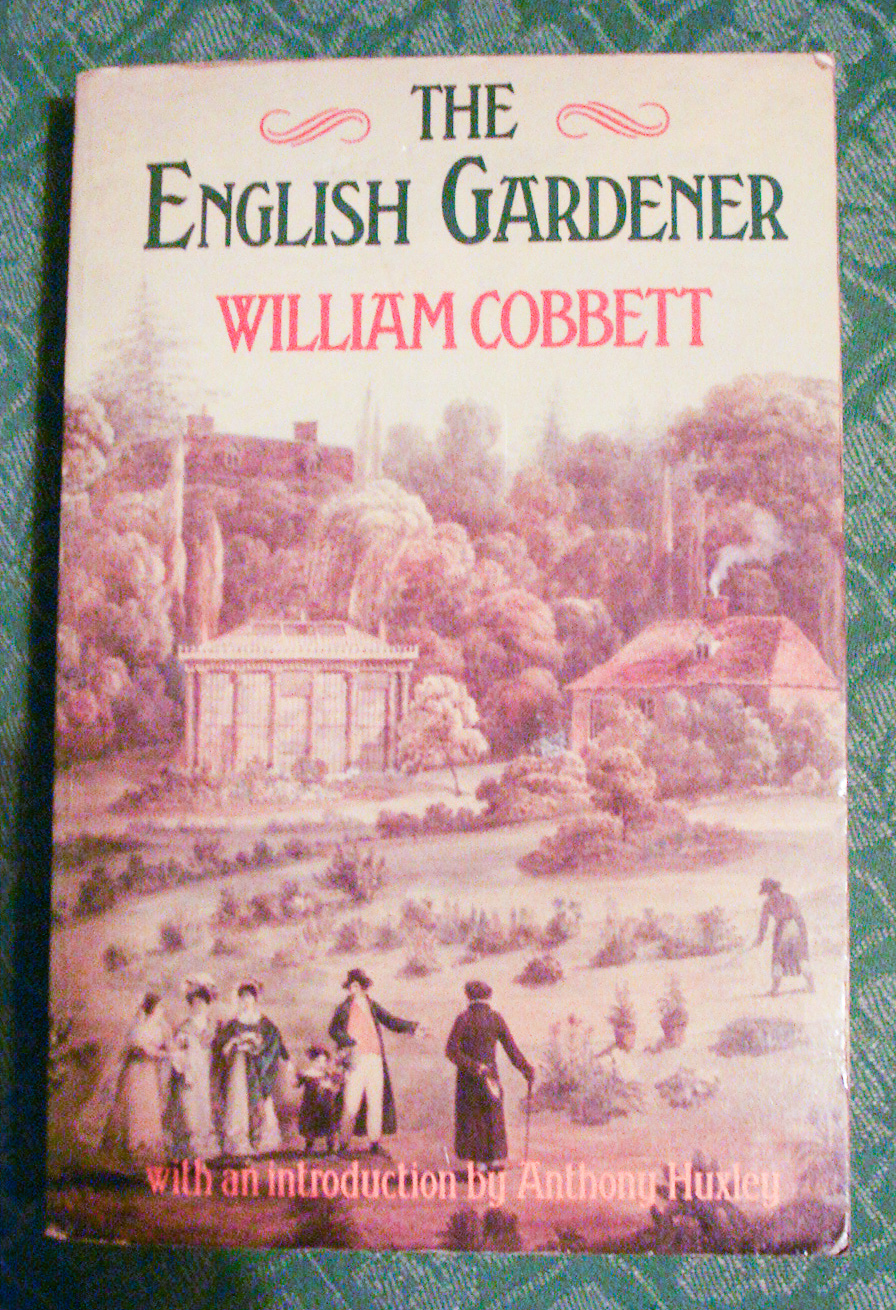
First up is William Cobbett, who I’m rather fond of. His life spanned the 18th and 19th centuries (17662-1835) and he was one of these gentlemen of independent means who seem to know everything about everything, are only too willing to pass on reams of good advice to others, which could be regarded as patronising. But he has a sense of humour, and it’s hard to take offence at anyone who recommends growing ‘four feet of good thorn-hedge’ to keep ‘the boldest boy’ away from trees laden with fine, ripe peaches!
Cobbett, who was a farmer, journalist, politician, traveller, and supporter of social reform, wrote several books, including The English Gardener, which was published in 1833 and claims to be ‘A Treatise on the Situation, Soil, Enclosing and Laying-Out, of Kitchen Gardens; on the Management of Hot-Beds and Green-Houses; and on the Propagation and Cultivation of all sorts of Kitchen-Garden Plants, and of Fruit-Trees whether of the Garden or the Orchard’. It is also a Treatise ‘on the Formation of Shrubberies and Flower-Gardens; and on the Propagation and Cultivation of the several shorts of Shrubs of Shrubs and Flowers’.
It is, as you can see, very comprehensive, with clear, concise instructions, and much of the advice he offers still holds good almost 200 years later. Not only that, but the book is surprisingly readable (though having said that I wouldn’t read it all in one go or even from start to finish – it’s one of those tomes that’s much more fun to dip in and out of when the fancy takes you. Anyway, he has the following to say about Collecting Seeds:
They should stand till perfectly ripe, if possible. They should be cut, or pulled, or gathered, when it is dry; and they should, if possible, be as dry as dry can be before they are threshed out. If, when threshed, any moisture remain about them, they should be placed in the sun, or near a fire in a dry room; and, when quite dry, should be put into bags, and hung up against a very dry wall, or dry boards, where they will by no accident get damp. The best place is some room, or place, where there is, occasionally at least, a fire kept in winter.
Threshing (by which I think he simply means separating the seeds from their husks and any bots of leaf or stem) prevents ‘injury from mice and rats, and from various other enemies, of which, however, the greatest is carelessness’. According to him ‘seeds of many sorts’ will be ‘perfectly good’ kept for 10 or 12 years, but I notice that he admits to always good, new seed alongside the old, as an insurance policy
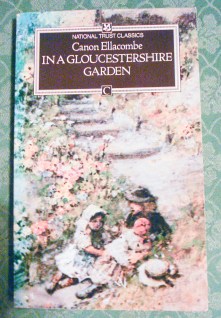
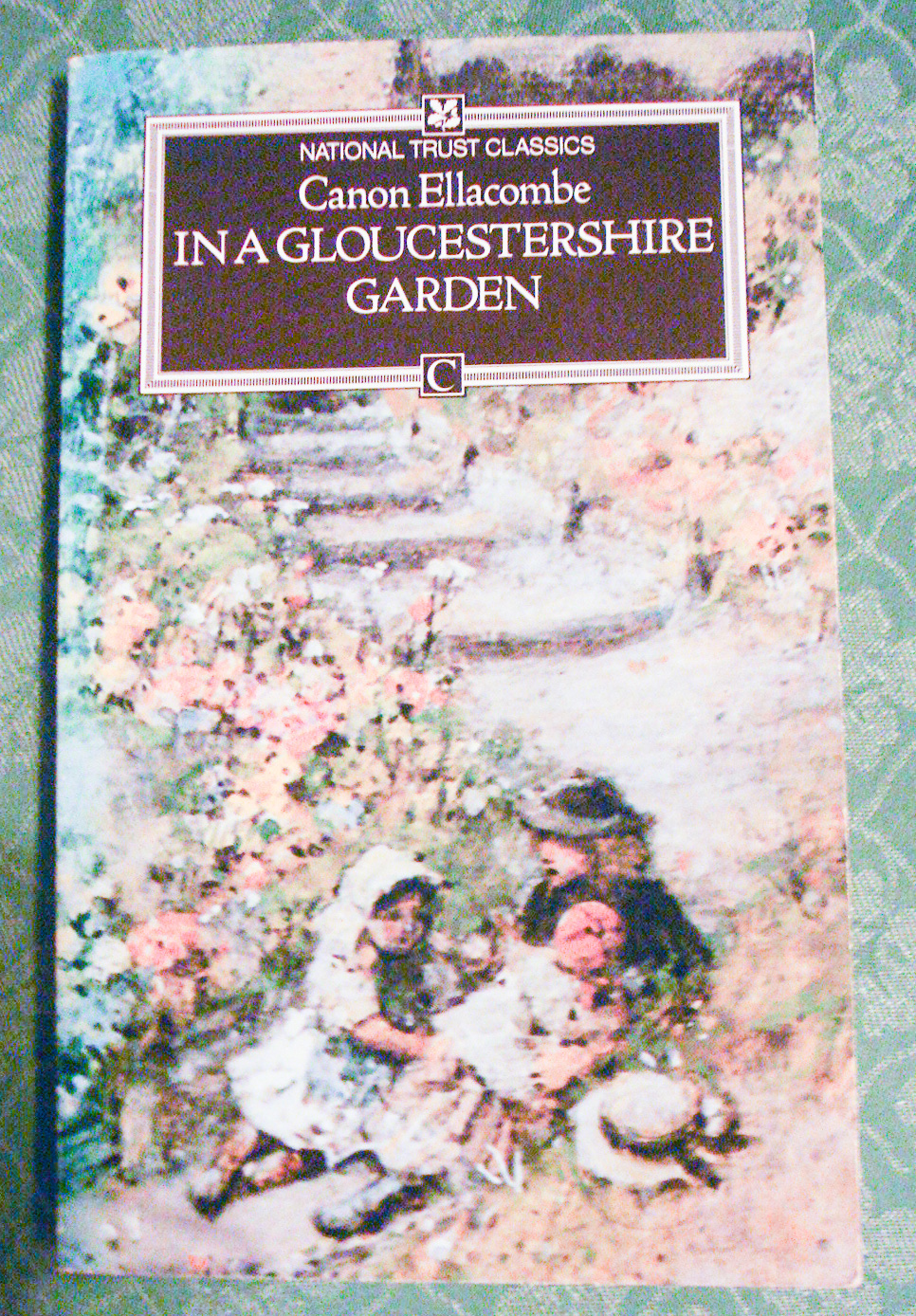
Canon Ellacombe’s In a Gloucestershire Garden is very different in tone and content. I gather the book, published in 1895, draws together a series of articles he wrote for The Guardian a couple of years earlier, and the Canon is clearly passionate about the garden he created his vicarage near Bristol. However, unlike Cobbett, whose book is very much a ‘how to’ volume , the canon wrote about his own experiences and thoughts in his garden, and it’s a mixture of his observations of nature, bits of science, history, poetry, and so on. I’d never heard of him until I came across this 1986 reprint in a second-hand shop, but I think it’s a gem – it’s another of those books you can dip in and out of when you’re in the mood, and Rev Ellacombe is never preachy or dull: his joy in plants, and the ups and downs of his efforts are delightful, and it’s easy to relate to his feelings. For example, most of us, I’m sure, will sympathise with what he says in his ‘September’ chapter.
In my own garden, for instance, there must be millions of seeds formed, and for the most part ripened every year, and yet, with the exception of such things as groundsel, thistle, and other garden weeds, which seem to have an unbounded power of germination, it is very unusual to find any quantity of seedlings.
Which of us hasn’t moaned about the ease with which weeds spring up, no matter how poor the soil, or how bad the weather, of how often you pull them out – yet the plants you want, upon which your lavish care and affection, fail to thrive.
And the canon also reminds us that a plant is not there for the beauty of its blooms, or its usefulness to mankind. No, he says, ‘the whole life of a plant is directed to the one object of forming seed for the continuance of the life of the plant’ – a fact which is easy to overlook, I think. And he goes on to explain:
…for the sake of the seed only was the flower formed, with calyx, corolla, pistil, stamens, and ovary, with colours and lines and scents to attract insects that would be friendly helps, or it may be with an equally subtle arrangement to ward off others that would be hurtful.
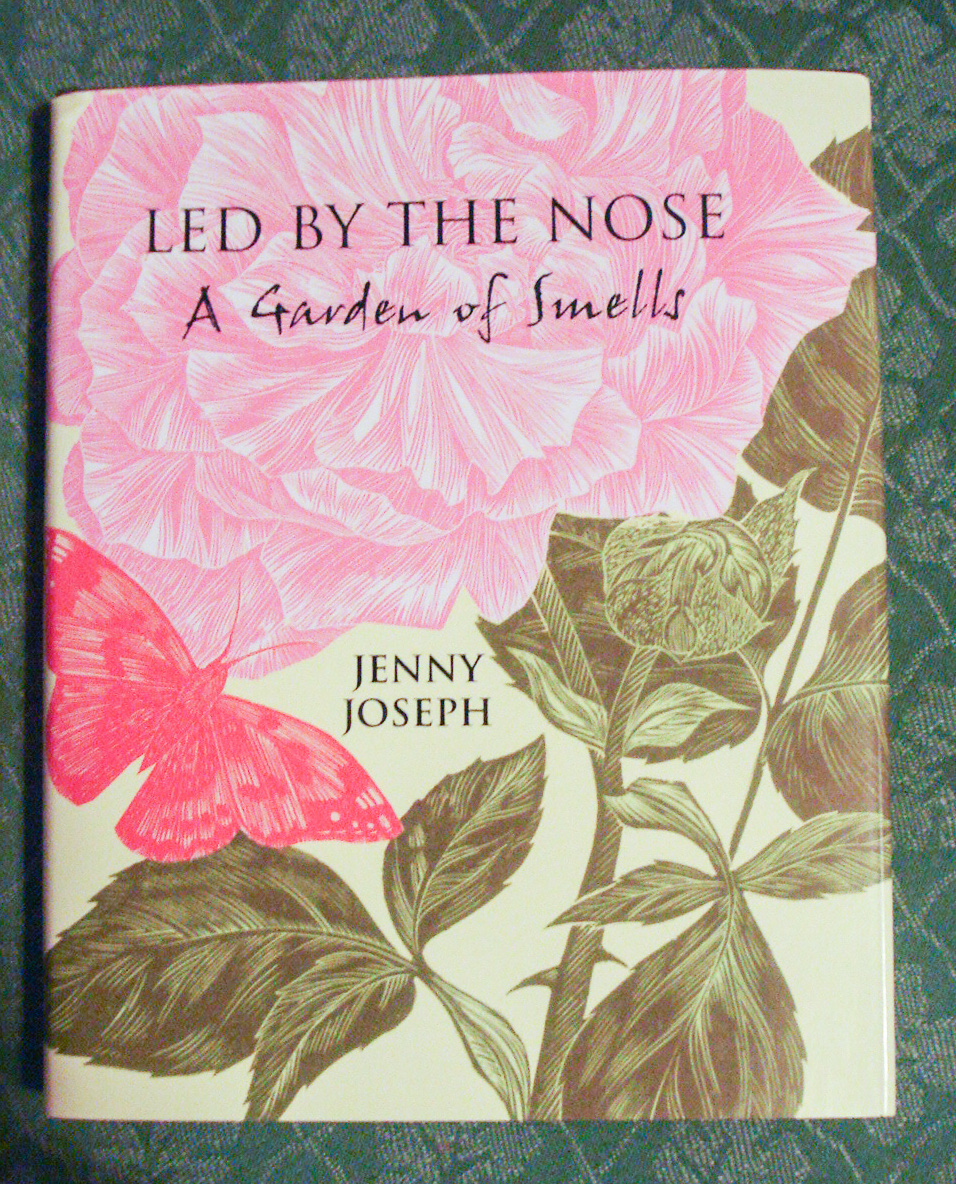
I think he would have enjoyed my final offering for September, Led by the Nose, A Garden of Smells, by Jenny Joseph, who is best known for her poetry (she wrote Warning – the one about growing old disgracefully), but turns out to be a keen gardener. As you might expect from a writer of her calibre, she has a real gift for conjuring the scents of the garden, but she’s also very knowledgeable about plants, and although this is not a gardening manual, she does include lists of what to grow if you want a perfumed garden, so you will know when the various flowers, herbs, fruit and vegetables give off their best fragrance, and can plan accordingly.
The book gives a very different, very personal view of gardening, which will make you think about what you want from a garden, and why you plant the things you do. Other people may plant sweet-smelling flowers because they attract bees, butterflies and other wildlife. Joseph plants them for sheer enjoyment, for the sensual pleasure she gets from stepping outside and inhaling the perfumed air, and perhaps more of us should follow her example. She says:
Even the berries and seed heads that do not give off a fragrance (and most fruits do have a scent recall the scents of the flowers they have come from. I am picking off pods and seedheads to dry and store, and as I shove them in my pocket I vow I will go in straightaway and find an envelope or container and write the name of what, where and when.
Like most of us, she doesn’t always get round to it, but she explains:
The seeds and the bulbs we either buy at this time or retrieve from those dug up and saved earlier, give us the promise of scent. It is a forward whiff which is to cross the coming months of dark damp enclosed dulled air, like a ray of light hitting a mirror in a darkened room, and transport the other side of winter, to spring. They hold future scents, literally, in their fabric, as well as in our imagination, September is one of the fulcrums of the year, balancing summer passed with winter to come.
I loved this book – it was beautifully written, and very inspiring, and I always enjoy gardening books which combine thoughts on the beauty of plans with reflections on Life and the Universe.


 The Book Trunk
Leave a reply to Helen Cancel reply