It’s a long time since I did any Saturday Snapshots, but I thought I’d start again, so here are my photos of snake’s-head fritillaries, taken at the beginning of May. They are the strangest flowers I have ever seen – that chequerboard pattern on the purple petals is amazing. There were a few white ones, which had similar markings, faintly visible, in a different shade of white, but it doesn’t show in photos. A friend says the delicate, drooping heads and the thin stems make them look like fairy plants. I think she’s right, because they have an other-worldly appearance.
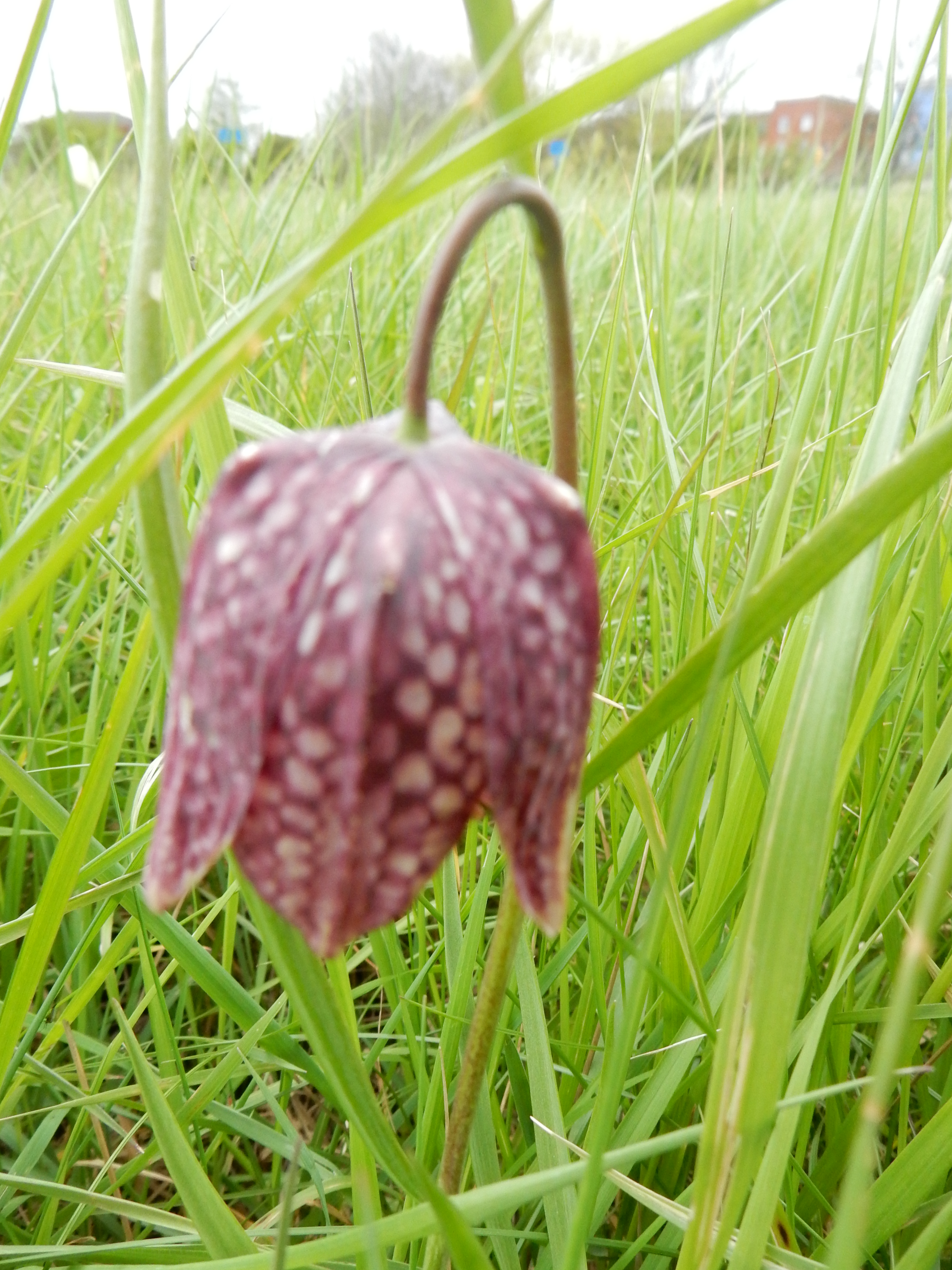
They are, apparently, available as garden plants, but are incredibly rare in the wild because their habitats – traditionally managed hay pastures which flood during the winter – are dying out. Many sites were ploughed and drained during World War Two, so food could be grown. Since then water meadows have been lost and damaged through development, use of pesticides and fertilisers, and changes in farming and land management. Here in Tamworth we are lucky because they grow in two places, but this is the first time I have seen them, and I was really thrilled.
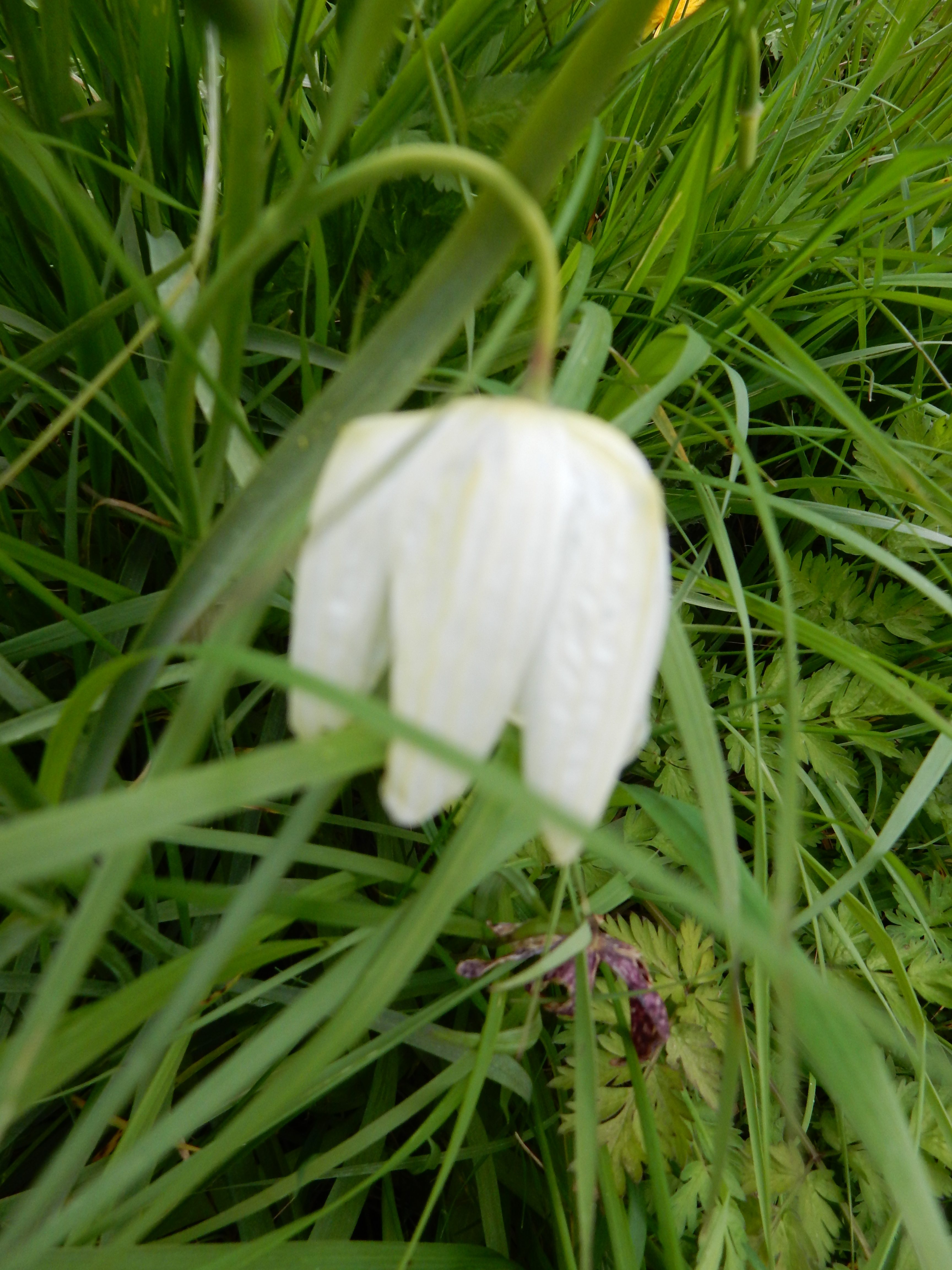
Surprisingly, they were growing quite close to the town centre, the Snow Dome and busy roads, on a patch of land known as Egg Meadow, near the River Anker. Another lady who was admiring them said that as a child she lived nearby. The grassland, called The Meadow, was much larger then, and every spring it was covered in snake’s-head fritillaries. I wish I’d asked more questions and found out when.
With that striking pattern on its six petals the plant is very distinctive. It flowers in April and May (providing pollen for early bees), and is about 12 inches high, with long, narrow leaves that could almost be mistaken for grass, and is a type of lily.
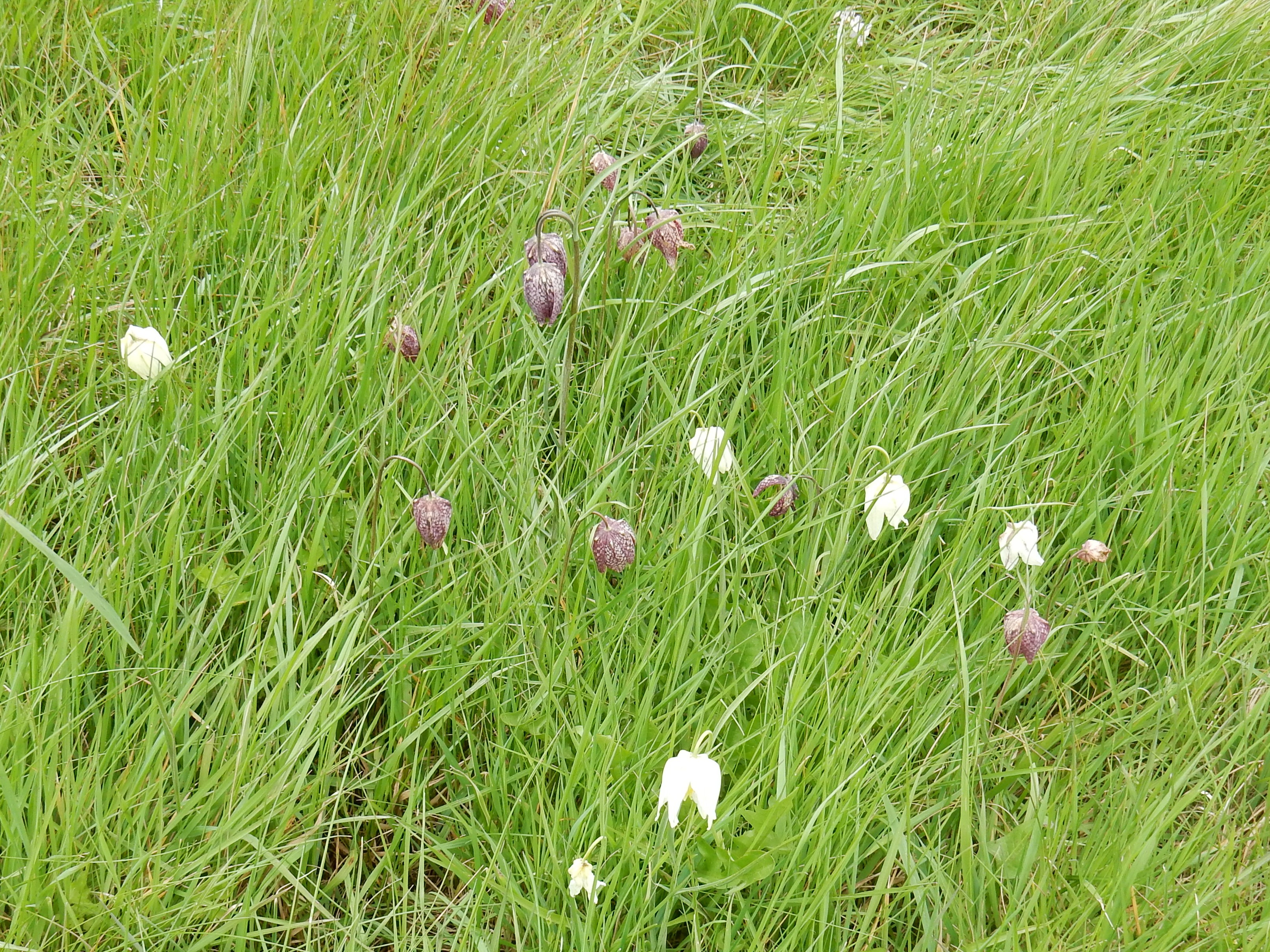
It has all kinds of other names, including chess flower, frog-cup, guinea flower, leper lily, chequered lily, and drooping tulip, but its botanical name is Fritillaria Meleagris. I gather that meleagris means spotted like a guinea fowl! Meleager was a Greek hero who was killed by his mother because he killed his brothers and uncle. Women who loved him wouldn’t stop crying, so the Goddess Artemis turned them into guinea fowl (meleagrides). The spots on the feathers are the women’s tears, and the petals look like the feathers. That’s the story anyway.
According to the Royal Botanic Gardens at Kew, the other bit of the name, fritillaria, comes from the Latin for dice-box, and dice-boxes were originally chequered (are such items still available?). But when I looked at John Gerard’s Herball or General Historie of Plants (first published way back in 1597, and great fun to read), I discovered a slightly different meaning. “It hath been called fritillaria of the table or board upon which men plaie at chesse which square checkers the plant doth very much resemble, some thinking it was named fritillus,” he says.
Then I had a browse in Familiar Wild Flowers, written and illustrated by Frederick Edward Hulme at the end of the 19th century and, to my delight, I found this: “… in one of the scientific periodicals we find a writer stating, ‘Found by me abundantly on an island in the Tame, near Tamworth, Staffordshire..’”
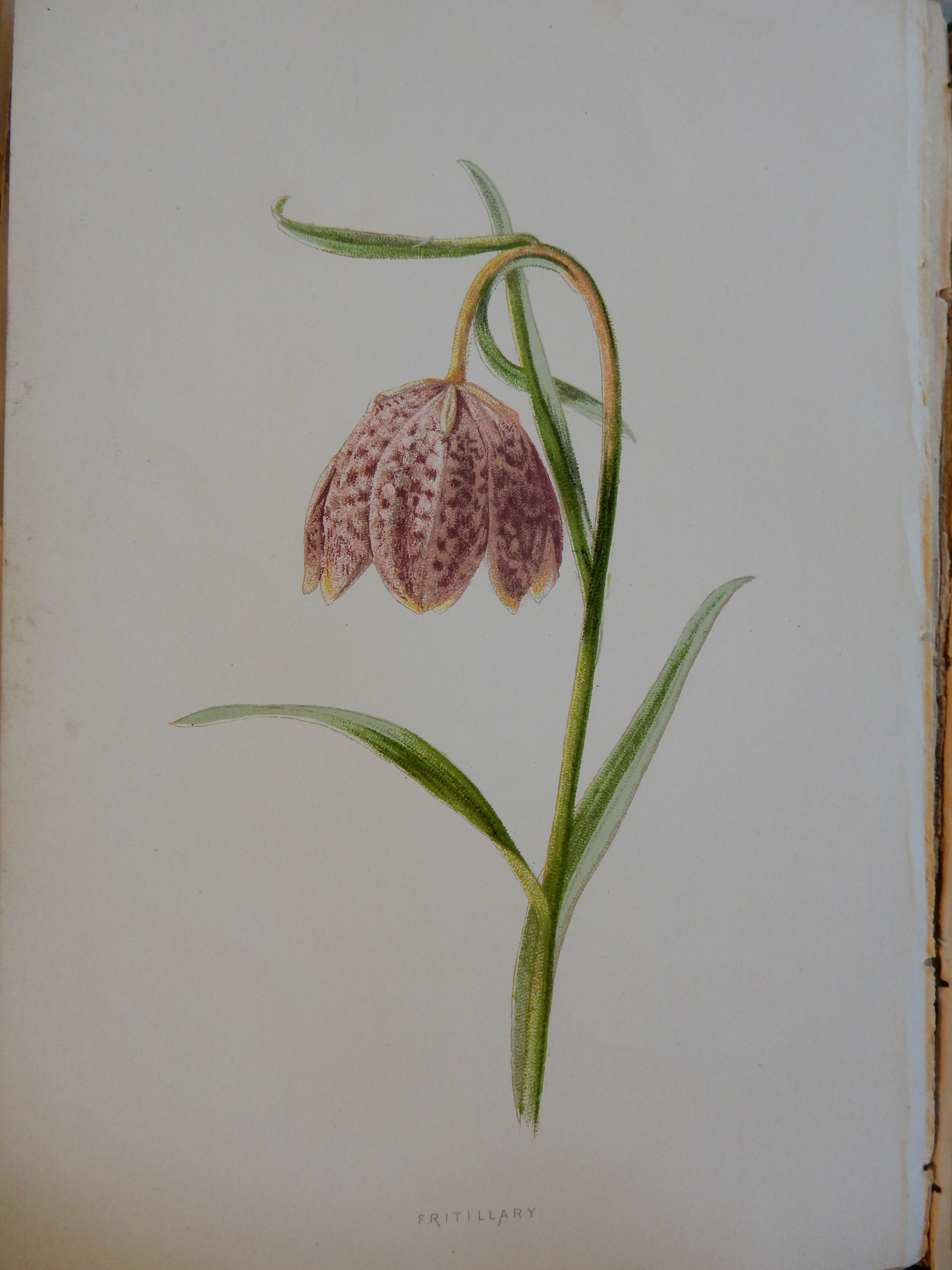
I’d love to know his source, but he doesn’t attribute any of his quotes. However, the island (Broad Meadow) is still there (now in Tamworth, not near – the town has grown), is still noted for its snake’s-head fritillaries, and is a nature reserve and Site of Special Biological Importance. The plants in the meadow where I took my photos seem to get overlooked, which is a shame.
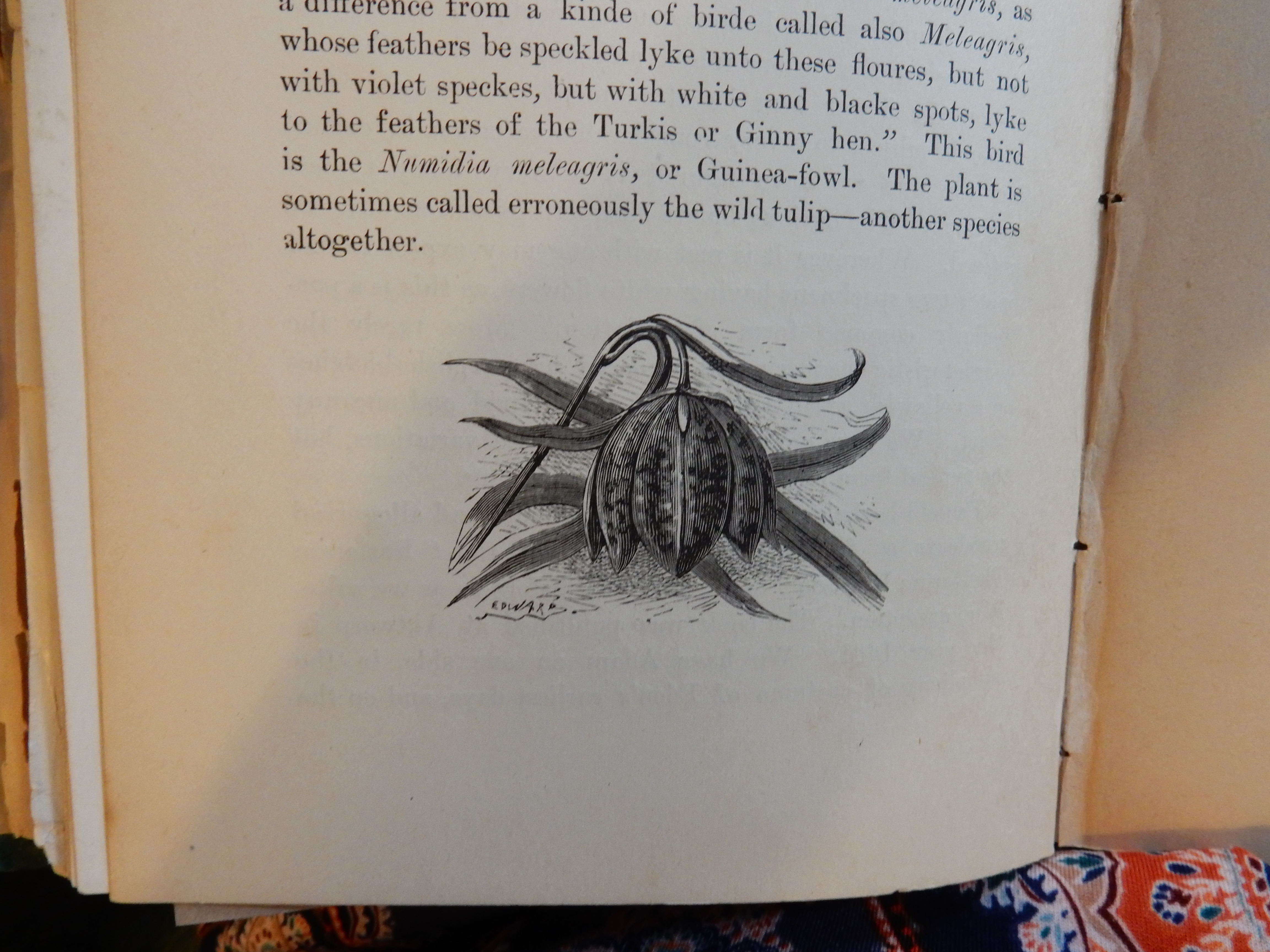
Anyway, back to names. I wondered if the snake’s-head fritillary was so called because it had once been used as an antidote for snake bites, but it has no medicinal, culinary or cosmetic value, and was never used for dyeing or anything else. It simply acquired its name because the drooping buds look like snake’s heads! It has, says Hulme, no ‘vertues’ and is therefore a ‘great singularity’. He goes onto tell us: “One of our old authors, in speaking of it, says. ‘Of the facultie of these pleasant floures there is nothing set doune in the ancient or later Writers, but are greatly esteemed for the beautifying of our gardens and the bosoms of the beautifull.”
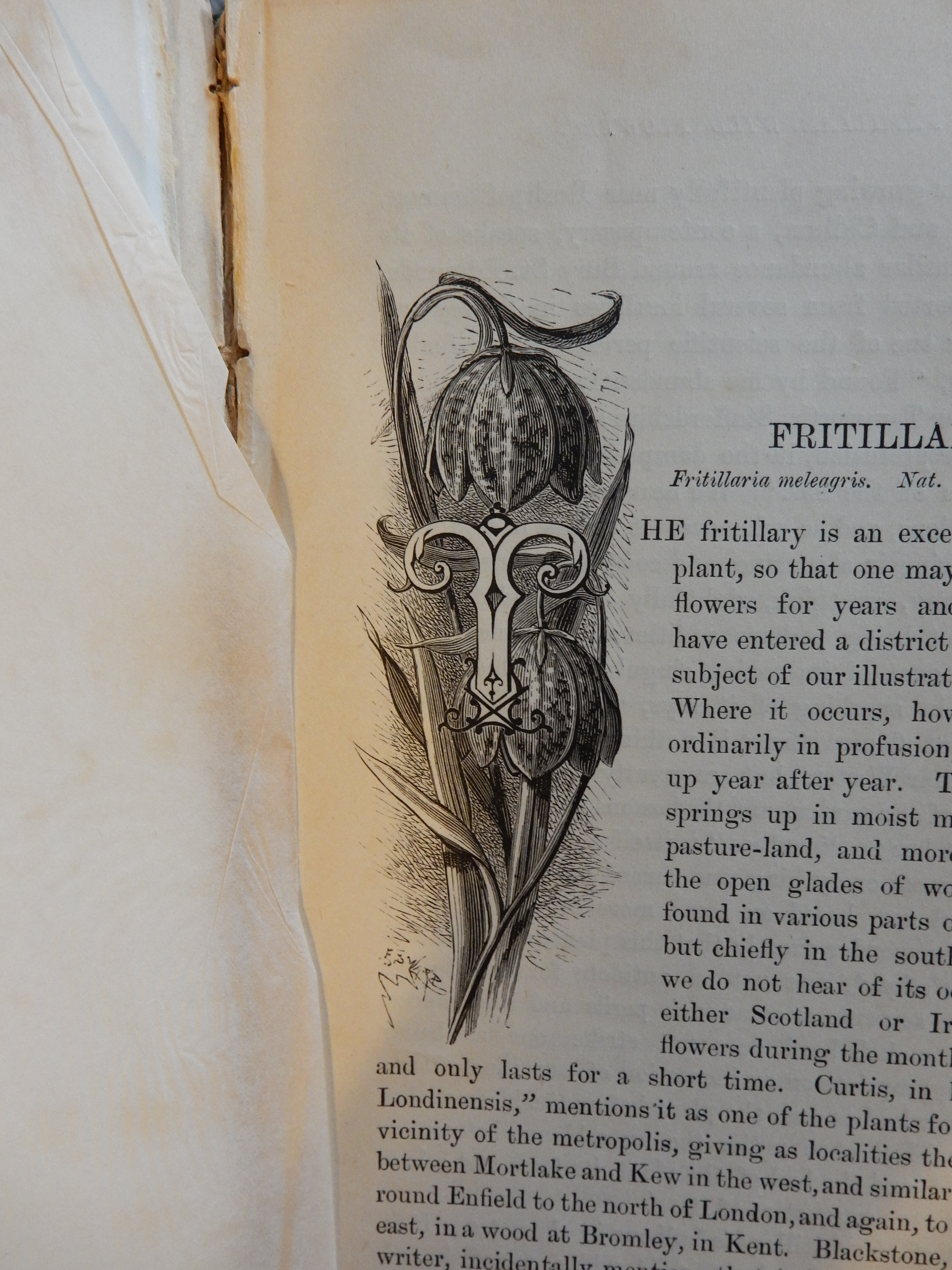
I’m not too sure about the wisdom of beautifying bosoms with fresh flowers. I think it sounds rather uncomfortable. Would they attract bees and other insects? And would you have to keep them damp so they didn’t wilt? But perhaps we need reminding that some things should be esteemed and enjoyed just because they are beautiful.


 The Book Trunk
Leave a reply to Poem Fanatic Cancel reply