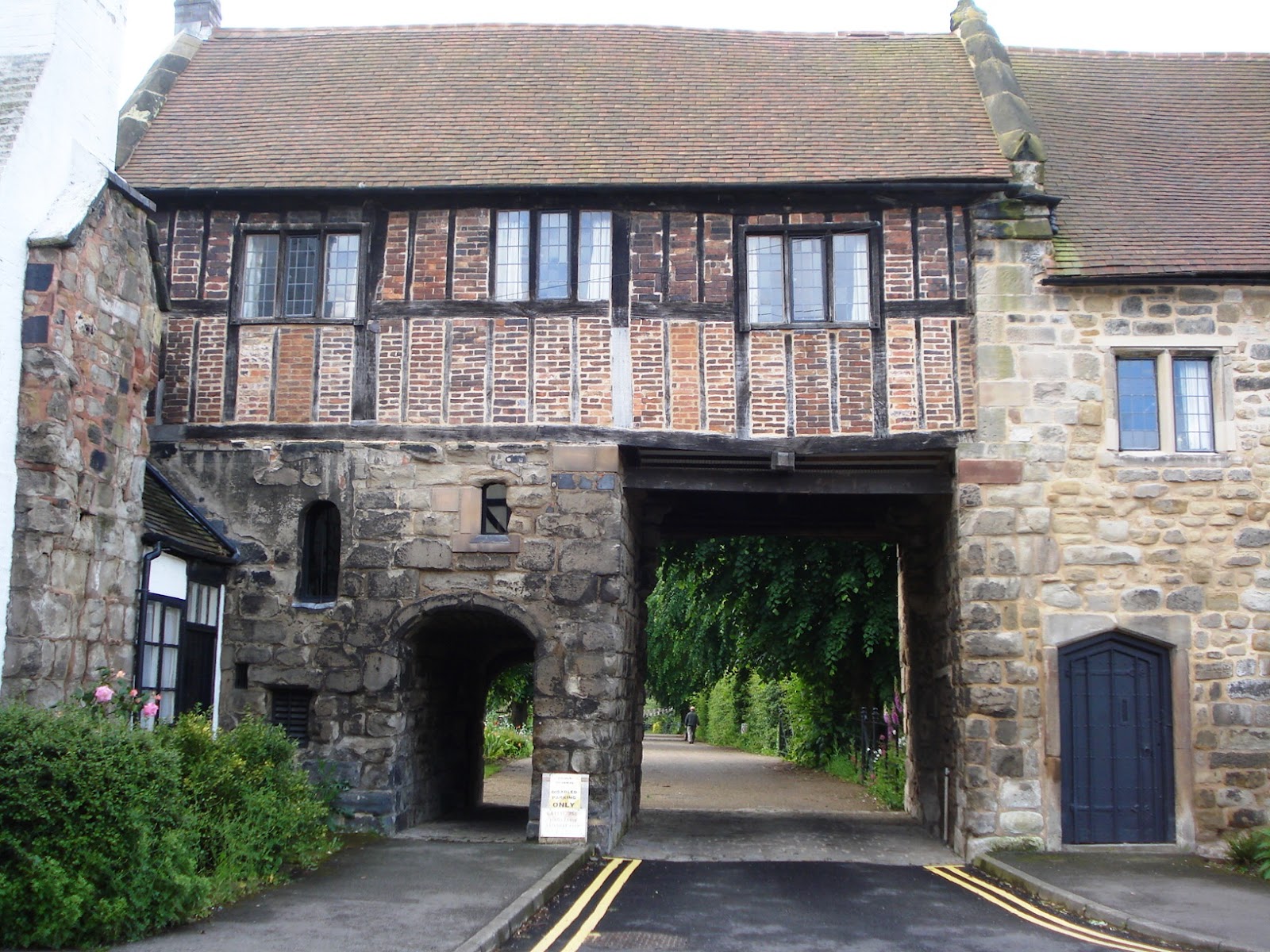
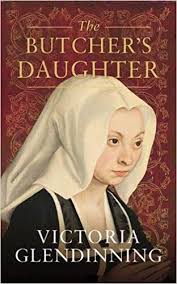
I am sure there is a good novel out there somewhere following the lives of nuns after they are forced to leave their convent home during Henry VIII’s Dissolution of the Monasteries – but this, alas, is not it. I bought The Butcher’s Daughter by Victoria Glendinning because just a couple of miles from where I live are the remains of Polesworth Abbey, and every time I pass the archway of the old Gatehouse I think of the nuns who walked beneath it in 1539, and never went back, and I always wonder what happened to them – one of the was reputed to be 100 years old, and what do you do when you lose your home at that age?
The heroine whose name I forgot as soon as I’d read the book (it’s Agnes Peppin – I had to look it up before I could write this) has a child out of wedlock, is packed off to Shaftsbury Abbey and then, when the abbey is closed, left to make her own way in the world as best she can. Unusually for the period, Agnes can read and write, and is something of a free thinker, but I’d say she’s pragmatic rather than feisty.
Now I hate to hurt the author’s feelings, but all I can say is that I hope Polesworth’s real-life nuns were better and nicer than those in the book. Indeed, at one point one of the former nuns, settled in her new life, says: “Have you ever thought, Agnes, just sometimes, that it was perhaps – perhaps – necessary? That it had to happen? That it was correct, a correction?” And I found myself agreeing, and thinking Thomas Cromwell had it absolutely right; there were strong political motives for the Dissolution of the Monasteries, and it provided a lot of revenue for the rapidly dwindling royal coffers, but if convents were like this one they deserved to be shut down.
I know women became nuns for many reasons, and not necessarily because they felt a calling, but in this novel there’s no sense of piety or belief, nor of the prayer and ritual that formed such a strong part of conventual life. Compassion is in pretty short supply, and charity grudging – care for the sick is perfunctory at best, while food doled out to the needy is rotten, and served up in dirty, broken dishes. Shaftsbury was the second richest religious house in the country, but you’d never know that from reading The Butcher’s Daughter.
And I’m not disputing the petty jealousies, bickering, and jockying for position – that happens anywhere, and should add to dramatic tension in this small, enclosed community. But it didn’t, and all the characters were so horrible – I couldn’t warm to any of them.
I’m sure it’s well researched, and I guess having Agnes meet various historical figures ought to have added an air of authenticity, but didn’t make me like the novel any better. It is just possible that while working in a house for gentlemen she might have had an affair with Thomas Wyatt the Younger (who was executed for treason after leading a rebellion against Queen Mary). But would a girl in Agnes’ position really have had the chance to meet John Leland, who was sent out by the King to record important volumes in monastic libraries? And even if she had, would he have handed her a copy of Chaucer’s Canterbury Tales, which would have been expensive?
Her time in the Convent is actually very, but things didn’t improve when she leaves. I couldn’t connect with the story in any way, shape or form.
And the title was irritating, because it has absolutely no bearing on the story. She could just as easily be a tailor’s daughter, or a farmer’s daughter. Actually, that’s all I’m going to say about this book – I do hate to be rude about living authors but, as you tell, I didn’t enjoy this novel at all, and I can’t be bothered to try and analyse it.
If you want a book about 16thC nuns, try Sarah Dunant’s Sacred Hearts, set in an Italian convent in 1570, just a few years later than The Butcher’s Daughter. It may be a tad melodramatic, but it’s better written, with more rounded characters, and gives a better idea of convent life. For stories set against the background of the Dissolution of the Monasteries, try CJ Sansom’s early Shardlake books, and for life at Henry VIII’s Court there’s Wolf Hall, and Bring Up the Bodies. There a surprising number of excellent books with convent settings – Rumer Godden, Muriel Spark and Sylvia Townsend Warner have all explored this theme. And there is the heart-rending story of Alex, in EM Delafield’s Consequences, who fails to find comfort in a convent, but is equally unable to find her way in the world outside.


 The Book Trunk
Leave a reply to chrisharding53 Cancel reply